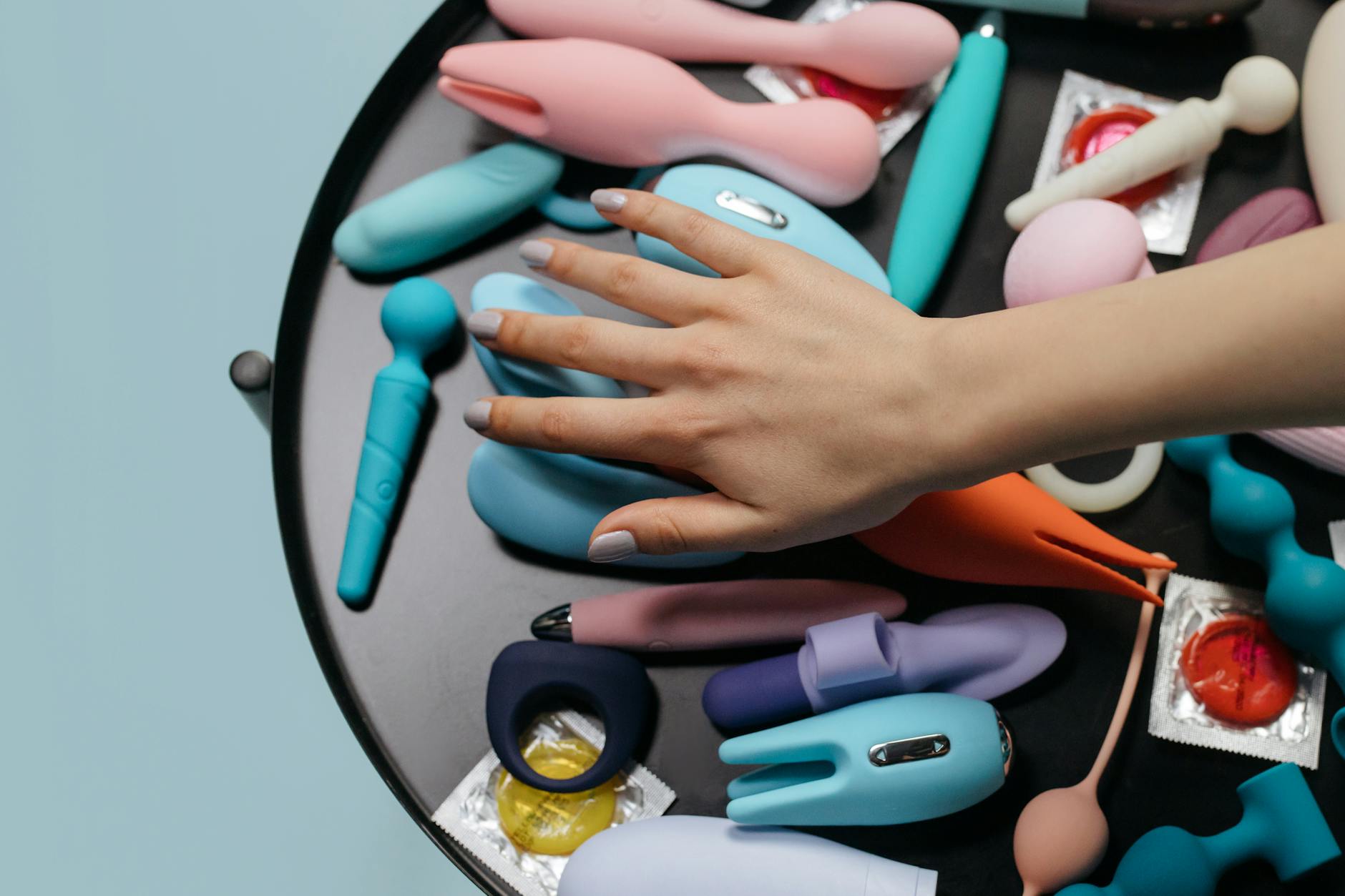
How to Use Lemon Vibrators When Pleasure Feels Numb After Antidepressants
Let's be real. One of the things nobody warns you about when starting an antidepressant is that your orgasms might disappear, your lubrication might dry up, or your entire body might feel like it's wrapped in plastic. You can feel everything technically, but pleasure itself becomes muffled, distant, like you're experiencing sex through a wall.
This is not your fault. This is not your partner's fault. This is pharmacology. And the good news is that it's not permanent, and there are actual tools (including lemon clitoral vibrators) that can help you navigate it while staying on medication that works for your mental health.
What SSRIs actually do to sexual response
Most antidepressants work by increasing available serotonin in your brain. Serotonin is great for mood. It is also involved in the neural pathways that trigger arousal and orgasm. That's not a design flaw. That's just how the brain is wired.
When serotonin levels spike suddenly, your brain recalibrates. Arousal takes longer. Orgasm becomes harder to reach. Some people report that orgasms feel flatter, less intense, or like they're happening at a distance. Others lose sensation entirely in their genitals. Some experience all of the above.
This hits differently depending on the medication. Sertraline and paroxetine tend to be the hardest on sexual function. Bupropion and mirtazapine are gentler. But every antidepressant affects the sexual response in someone, and if you're one of those people, it's worth acknowledging that your body isn't broken. Your chemistry just shifted.
The timeline and what to expect
Some people adapt within 2-3 weeks. Others take months. A few never fully regain their pre-medication baseline, but they find a new equilibrium that works. Here's what typically happens.
Weeks 1-2 are often the worst. Your brain is still recalibrating, and pleasure feels completely absent. Weeks 2-6, some sensation usually returns, but it's muted. By week 8-12, many people start to feel something closer to their baseline again. After 12 weeks, if nothing has improved, it's time to talk to your prescriber about dosage, timing, or switching to a different class.
The key insight: numbness often feels permanent because you're in the thick of it. But most sexual side effects from antidepressants are temporary. Your body has extraordinary adaptive capacity.
Why lemon vibrators work better during this phase
Lemon clitoral vibrators use air-suction technology, which means they work through gentle, rhythmic pressure rather than direct vibration. Here's why that matters when you're on antidepressants.
When sensation is muted, direct stimulation often feels numb or even uncomfortable because you're applying intense sensation to tissue that's not registering much. Air suction, by contrast, creates a broader pattern of pressure that engages more nerve endings across the clitoris and surrounding tissue. It's more efficient. It requires less neural firing to register as pleasure.
In practical terms: if you're using a standard vibrator and feeling nothing, it's easy to assume your pleasure is gone. With a lemon vibrator, you often feel something sooner, which helps your brain recognize that pleasure is still there. It's not gone. It's just asking for different hardware.
Starting slow when sensation is blunted
When you're numb, the temptation is to go hard or fast, thinking that intensity will break through. It usually doesn't. You end up frustrated, and the tissue gets irritated, which makes everything worse.
Here's what actually works.
Start at the lowest setting (1-3 on the Lem, for example). Let the suction build gradually against your clitoris. You might feel nothing at first. Keep it there for 30-45 seconds. Often, after 30 seconds of steady, light pressure, sensation starts to bloom. Your nervous system recognizes what's happening and wakes up.
Once you feel something, resist the urge to jump to high intensity. Increase by one level every 2-3 minutes. This trains your body to register pleasure at lower thresholds. Over time, as your antidepressant levels stabilize and your body adapts, you'll be able to access pleasure more quickly and feel it more intensely.
This patience is the opposite of what your brain is screaming at you to do. But it works.
The timing question: should you dose differently?
Do not change when you take your medication without talking to your prescriber. That said, some people find that taking their SSRI at night instead of the morning (if their doctor approves) creates a window of higher sexual sensation in the afternoon or early evening as the medication peaks and then settles. Talk to your psychiatrist or GP about whether this makes sense for your specific medication.
Some people take a "medication holiday" (skipping one dose, usually on a Friday) to catch a window of heightened sensation. This is controversial and not recommended for everyone. For some antidepressants, missing one dose is fine. For others, it can trigger withdrawal symptoms or mood crashes. Only do this if your prescriber explicitly says it's safe.
Don't improvise with your psychiatric medication. Just don't.
When to try lube, positioning, and longer warm-ups
Antidepressants often decrease natural lubrication, especially in people with vulvas. Use water-based lube. Not because your body is broken, but because lube amplifies whatever sensation you do have and protects tissue that's more delicate.
If you have a partner, longer foreplay often helps. Numbness tends to affect genital sensation more than overall body sensation. Kissing, touch on other parts of your body, and building arousal gradually often works better than jumping straight to genital stimulation. Give your nervous system time to engage.
Positioning matters too. When your body needs more time to warm up and foreplay, switching positions or angles can sometimes unlock sensation that felt absent moments before. This is especially true with lemon clitoral vibrators. Shifting the angle by a few degrees can change the pressure distribution across the clitoris, and sometimes that small change registers as pleasure when straight-on pressure doesn't.
The mental piece: numbness isn't about desire
Here's where therapy language becomes useful even if you've never been to a therapist. Sexual numbness from antidepressants affects sensation and sometimes orgasm. It does not typically affect desire or arousal in the emotional sense. You might still want sex. You might still feel attracted to your partner. Your body just isn't translating those mental states into physical sensation as efficiently.
This distinction matters because a lot of people interpret numbness as loss of desire and start spiraling into "I don't want sex anymore" when the real issue is "my nervous system is processing stimulation differently right now." These are not the same problem, and they have different solutions.
If you're partnered, talking about this openly helps. "I still want us to be intimate. My body is just on a different frequency right now" is more honest and more actionable than "I don't feel like sex." It opens the door to problem-solving instead of blame.
When to ask your prescriber for a medication change
If 12 weeks have passed and sexual numbness hasn't improved, it's time to revisit the conversation with your psychiatrist or GP. Options include adjusting the dose, taking the medication at a different time, adding something like bupropion or buspirone that can counteract sexual side effects, or switching to a different antidepressant class entirely.
Bupropion is known for being gentler on sexual function. Some tricyclic antidepressants have lower rates of sexual side effects. SNRIs sometimes work better for some people than SSRIs. The point is that medication-induced sexual numbness is a known, documented, and treatable problem. If it's affecting your quality of life, you have options.
Don't stay on something that kills your sexuality if there's another medication that doesn't. Mental health and sexual health are both important. You don't have to choose.
FAQs about lemon vibrators and antidepressant-related numbness
Will using a lemon vibrator make my numbness worse?
No. If anything, starting with a tool designed for lower-pressure, broader stimulation (like lemon clitoral vibrators) is less likely to cause irritation than pushing harder with a standard vibrator. The key is starting at the lowest setting and building gradually. You're teaching your nervous system to register pleasure, not battering through numbness with force.
How long does sexual numbness from antidepressants usually last?
For most people, 4-12 weeks. Some people feel significant improvement within the first month as their body adapts. Others take the full 12 weeks. A small percentage don't see improvement without a medication change. The timeline is individual and depends on which antidepressant you're on, your body's chemistry, and a bunch of factors that are hard to predict.
Can I take a break from my antidepressant to "reset" my sexuality?
No. Stopping antidepressants without medical supervision can cause withdrawal symptoms, mood crashes, and return of depression. If your sexual side effects are severe enough that you're considering stopping, that's a sign to talk to your prescriber about changing medications, not stopping altogether. Your mental health comes first. There are solutions that don't involve going off medication.
Is numbness different from not being able to orgasm?
Yes. Numbness means you can't feel sensation. Anorgasmia (inability to orgasm) means you can feel sensation but reaching orgasm is extremely difficult or impossible. They're related but not identical, and they often respond to different strategies. Lemon clitoral vibrators tend to help more with sensation numbness than with pure anorgasmia, though some people find the gentler stimulation also helps with orgasm difficulty.
Will my sexuality ever feel normal again?
Most likely yes. As your body adapts to your medication, sensation usually returns, sometimes to your baseline, sometimes to a new equilibrium that's slightly different but still satisfying. And even if your medication-induced numbness persists, you're not broken. You just need different tools and strategies, which you can find. Using lemon vibrators when sensation feels muted after years of routine and pharmaceutical side effects are different problems with overlapping solutions.
Should I tell my partner about this?
If you're partnered, yes. Sexual numbness is temporary, it's medical, and it's not about attraction or desire. Your partner is probably noticing that something's different, and a conversation clears that up fast. It also opens the door to collaborative problem-solving rather than confusion or hurt feelings. "I'm dealing with a medication side effect, and here's what helps" is easier to navigate than silence and assumption.
The bottom line
Antidepressants save lives. They also sometimes make pleasure harder to access. That's a real trade-off, and it's worth taking seriously. But it's temporary for most people, and there are concrete strategies (including lemon clitoral vibrators, patience, communication, and time) that help you navigate it without abandoning medication that works for your mental health.
Your sexuality is not gone. Your nervous system is just on a different frequency right now. With the right approach, you'll find your way back to pleasure. If you have questions about how to support your health during this transition, reach out to us. We're here to help.