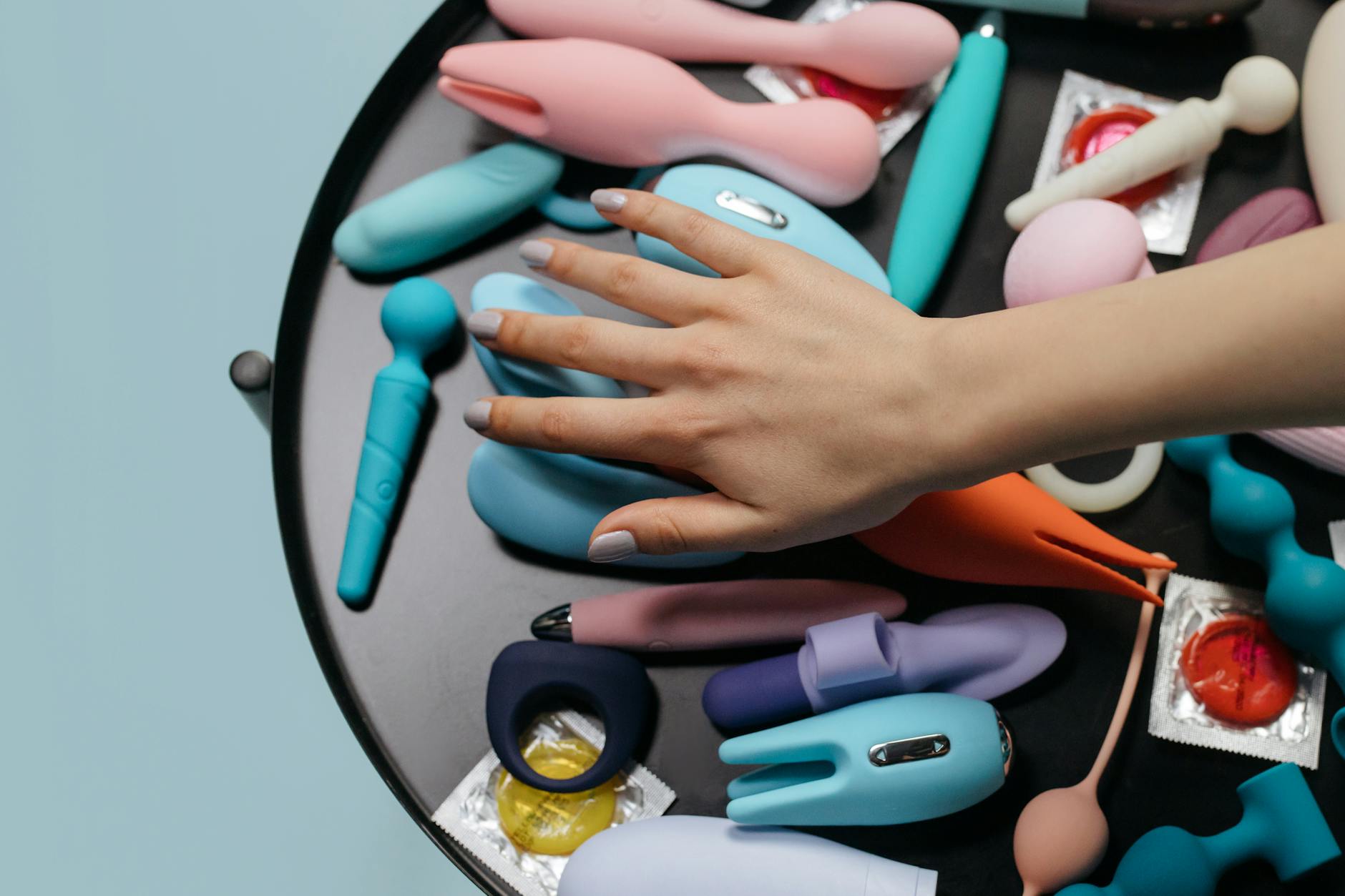
Here's what nobody tells you about pleasure and hormones
Your body isn't broken when hormones shift. It's just recalibrating. And when it recalibrates, the tools that worked yesterday might not work the same way today. That's not failure. That's information.
Hormonal transitions are everywhere: perimenopause in your 40s, postpartum recovery, hormonal birth control adjustments, even high-stress phases that tank cortisol and flatten desire. Each one rewires your nervous system's response to touch, changes tissue thickness and lubrication, and alters how quickly arousal builds. Most people assume they have a pleasure problem. What they actually have is a mismatch between their body's new needs and their old approach.
That's where lemon clitoral vibrators come in. They're designed for sensitivity that shifts, for tissue that needs gentler handling, and for arousal that takes longer to build. Let me walk you through why they work so well during these transitions, and how to use them strategically through every phase.
Why tissue sensitivity changes when hormones fluctuate
Let's start with the basic biology. Estrogen and testosterone don't just affect your mood or your period. They also directly control how thick your clitoral tissue is, how much blood flows there, and how sensitive your nerve endings feel to touch.
When estrogen drops—whether from perimenopause, postpartum hormonal crash, or hormonal birth control—your clitoral tissue gets thinner. That sounds bad. In some ways it is: lubrication drops, arousal takes longer, and direct friction can feel uncomfortable or even painful. But here's the plot twist: thinner tissue is often more sensitive in a different way. The same firm vibration that felt good before can suddenly feel numb, sharp, or overstimulating.
This is where most people get stuck. They think "My pleasure is broken" or "I need to try harder." What they actually need is a tool that works differently. A lemon sucker or other clitoral vibrator that uses gentle suction instead of direct vibration is almost always more comfortable during these phases because it stimulates nerve endings without requiring the tissue to be thick or resilient.
Postpartum bodies are the clearest example. Estrogen crashes after birth. Prolactin (the milk-making hormone) suppresses testosterone. Your pelvic floor is healing. Direct vibration often feels terrible. Air-suction lemon vibrators? Usually feel amazing, because they bypass the friction problem entirely.
Perimenopause and the long arousal ramp
Perimenopause is weird because it's not consistent. One month your hormones are almost normal. The next month they're bottoming out. This unpredictability is maddening—and it's also an ideal time to switch tools.
During perimenopause, arousal typically takes 15-30 minutes instead of 5-10. Your clitoris may feel numb during the first part of that window, then suddenly oversensitive. Direct vibration makes both problems worse: if you use full intensity while numb, you'll desensitize further. If you switch to it once you're aroused, the jump in intensity can be jarring.
A lemon clitoral vibrator gives you nuance. You can start on the lowest pattern, let suction gently wake up the tissue, then graduate to higher patterns as arousal builds. The sensation itself feels different from vibration—gentler, more like a pulse than a buzz—which many people find is easier on tissue that's already overwhelmed by hormonal chaos.
The other huge win: air-suction devices work better for people who've experienced reduced clitoral sensitivity due to hormonal shifts. Because they're not relying on tissue thickness or direct friction, they often bring back sensation that felt lost.
Postpartum recovery and starting again
Let's be real: postpartum is not a sexy phase. Healing is the job. But somewhere around 4-6 weeks postpartum (or whenever you're physically cleared by your provider), some people want to start exploring pleasure again. And almost all of them find their old approach doesn't work.
Postpartum bodies are dealing with multiple overlaps: hormonal crash, pelvic floor trauma or surgery, exhaustion, and lowered desire from stress and prolactin. Jumping back to regular vibration is like trying to use the same skincare routine after moving to a different climate. Wrong tool for the new conditions.
Lemon vibrators are gentler to reintroduce pleasure postpartum because they don't require firmness or thickness. You can use them externally, you control the intensity with suction power and pattern, and you can literally start on the gentlest setting and work up as healing progresses. Many postpartum people tell me they have the most satisfying orgasms of their lives once healing is complete—because they learned their body's new map during recovery instead of fighting against it.
Hormonal birth control and the flattened desire loop
Not everyone has this experience, but many people on hormonal birth control notice their arousal is slower to ignite and harder to build. This is real: synthetic hormones affect dopamine and sensation sensitivity, especially in the first few months on a new pill or method.
If this is you, lemon clitoral vibrators are worth trying because they stimulate sensation differently than standard vibration. Some people find that the suction pattern can break through the numbness that hormonal birth control creates. Whether it's because of the gentler stimulus or the different nerve pathway being activated, the result is often that pleasure feels accessible again.
High-stress phases and cortisol crashes
Hormones aren't just reproductive. Stress hormones—cortisol and adrenaline—also suppress sexual desire and blunt sensation sensitivity. During high-stress periods (work crises, family stuff, grief), your nervous system is in survival mode. Arousal takes longer. Touch feels muted. Orgasms can be harder to reach.
This is temporary, but it's real. And instead of white-knuckling through it with your old method, this is a perfect time to experiment with tools that meet you where you are. Lemon vibrators are less intimidating to start with during stress, easier to use in short windows, and their gentler sensation doesn't require the same level of deep arousal to feel good.
The practical adjustment checklist
Here's what actually changes when you switch to a lemon sucker during a hormonal transition:
Start with lower suction settings. Even if you were using vibrators at medium-to-high intensity before, back down. Your tissue is different now. You can always go up.
Budget more warm-up time. Arousal is slower. Give yourself 20-30 minutes instead of rushing. Use the time to relax, not to feel pressured.
Use lubrication freely. Water-based lube is your friend during hormonal transitions. It's not a sign of anything wrong—it's smart biology.
Explore different patterns. Lemon clitoral vibrators usually have multiple suction rhythms. One might feel perfect while another feels weird. That's normal. Spend time testing different patterns.
Pay attention to timing. If you're in perimenopause, track which days feel better for pleasure. Arousal and sensation often correlate with where you are in your cycle, even if the cycle is irregular.
When to involve a partner in the transition
If you're in a partnered relationship, this is worth talking about. Not as "Something's wrong with me," but as "My body is changing and I'm experimenting with different tools." This can actually be an opportunity to reconnect, especially if you've been feeling disconnected during the hormonal shift.
Some partners love the invitation to explore something new together. Others feel better leaving you to your own exploration. Both are fine. The key is naming it instead of pretending nothing changed. Read more on how lemon vibrators help couples reconnect after stress to see how this conversation can go.
Hormonal transitions are temporary, but what you learn isn't
Here's the thing I wish someone had told me when I was navigating my own hormonal shifts: the tools and knowledge you develop now are permanent. You'll learn how your body responds, what kind of touch works, how long arousal takes, what kills the mood and what builds it. That knowledge doesn't vanish when hormones restabilize.
Many people use a lemon clitoral vibrator intensely during perimenopause, then keep using it long after because they genuinely prefer the sensation. Others find they cycle between methods depending on where they are hormonally, season to season or year to year. Both patterns are smart. You're not supposed to have the same setup forever. Your pleasure setup should evolve as your body does.
Your body isn't broken when hormones shift. It's just asking for different support. Learn more about sensitivity changes and what actually helps, or check out our guide to choosing the right lemon vibrator for your needs.
FAQ: Hormonal transitions and clitoral vibrators
How long does it take for pleasure to feel normal again after a hormonal shift?
It depends on the shift. Postpartum hormones usually stabilize by 6-12 weeks, though prolactin stays elevated longer if you're nursing. Perimenopause transitions happen over months or years. Birth control adjustment usually takes 1-3 months. The key is not judging yourself during the transition window—your body is literally recalibrating neurologically. Be patient with the timeline.
Can I use a regular vibrator during hormonal transitions or do I really need a lemon sucker?
You can use whatever feels good. Some people switch tools, others just adjust settings or add more lubrication to make their current tools work. Lemon clitoral vibrators are genuinely easier for many people during transitions because of how they stimulate, but they're not mandatory. If you're curious, try one. If your current tool works fine, stick with it.
Will using a lemon vibrator during perimenopause help my pleasure come back faster?
Not faster, but more comfortably. Pleasure isn't something that goes away—it's recalibrating. Using a tool that works with your new body's map (gentler stimulus, different nerve activation) can make the recalibration feel way less frustrating. You might also discover sensations you never felt before, which is its own kind of win.
Is loss of sensation during hormonal transitions permanent?
Rarely. Most people regain their baseline sensation once hormones stabilize, though sometimes it feels slightly different. If sensation loss is severe or doesn't improve after hormones stabilize, that's worth mentioning to your doctor—it could point to something like genitourinary syndrome that responds well to specific treatments.
Should I talk to my partner about switching to a lemon vibrator during a hormonal transition?
Only if you want to. If you're using it on your own, that's your private exploration. If your partner is involved in your pleasure, a conversation can be helpful: "My body is changing and I'm trying new things to see what feels good." This frames it as curiosity, not crisis, and usually opens the door for better connection.
Can hormonal birth control make me less able to orgasm, and will a lemon clitoral vibrator help?
Hormonal birth control can blunt sensation and lower desire in some people—that's real and documented. A lemon sucker might help because of how it stimulates, but it's not a guarantee. If orgasm loss is severe or distressing, talk to your provider about switching methods. This is a legitimate side effect worth addressing.
The bottom line
Hormonal transitions are plot twists in your pleasure story, not plot holes. Your body isn't broken. It's different. And when you work with that difference instead of against it, you often find pleasure that's actually deeper and more interesting than what came before. Give yourself permission to experiment. Your best sensation might be waiting just on the other side of the shift.