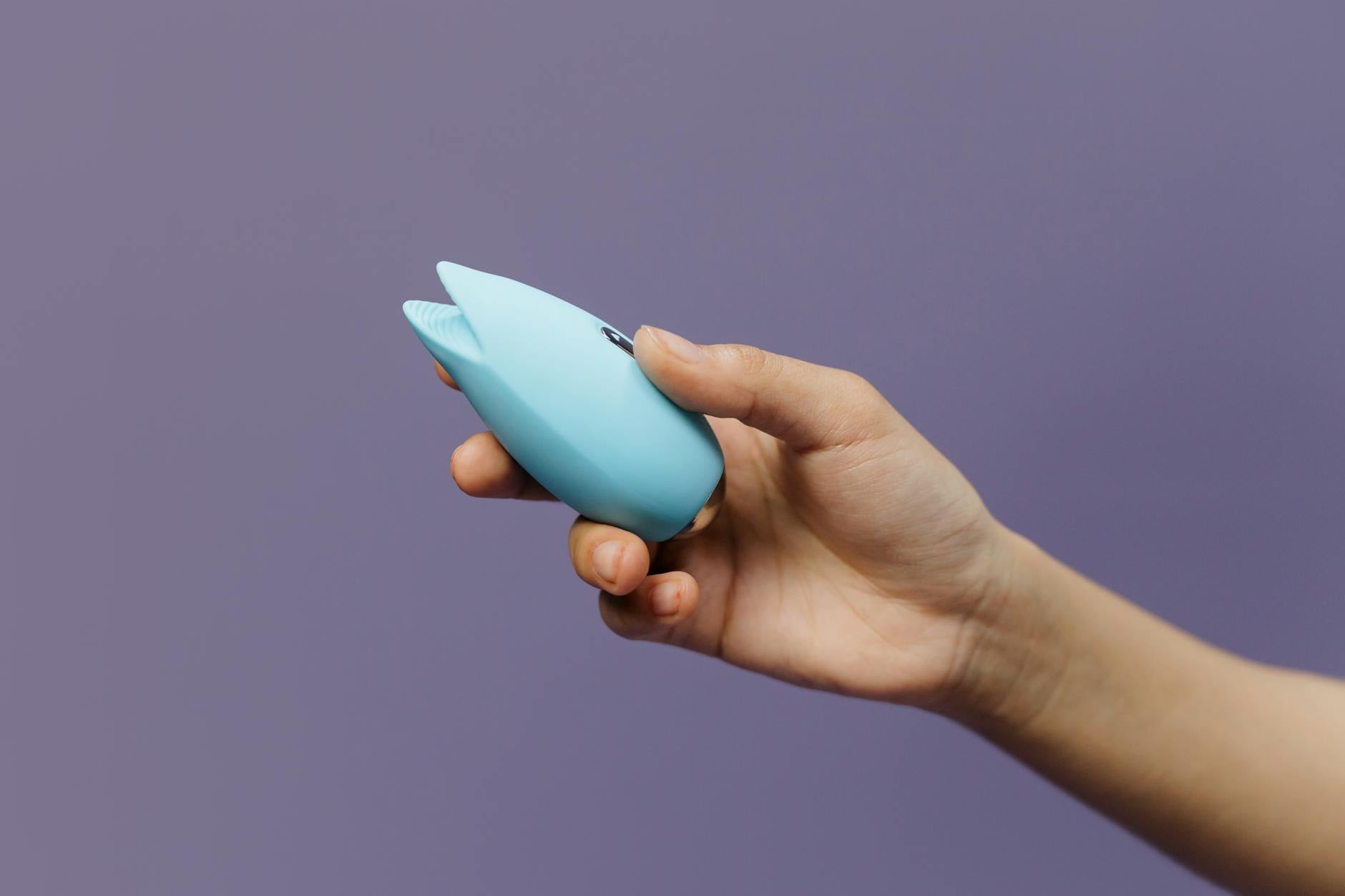
Let's talk about why your wand might feel too much
Wands are everywhere. They're marketed as the workhorse of pleasure. But here's what nobody says: a traditional wand vibrator is essentially a small jackhammer aimed at some of the most sensitive nerve tissue in your body. If you've ever found a wand numbing, overstimulating, or just plain harsh, that's not a personal failure. That's physics.
Your clitoris has roughly 8,000 nerve endings packed into a space smaller than a pea. A wand's broad vibrating head makes contact with a wide area and pounds away at high frequency. For some bodies, that's perfect. For others, especially those with sensitive tissue, it's too much too fast. Lemon vibrators work differently. They use suction instead of direct vibration, and that changes everything about how your nervous system responds.
The anatomy: why direct vibration can overwhelm sensitive tissue
Your clitoris has two main parts: the glans (the visible bump) and the body (which extends into your pelvis in a wishbone shape). The glans is where most of the nerve density lives. Those nerves aren't designed for repeated hammering. They're designed for varied, nuanced stimulation.
When a wand vibrates, it's creating micro-collisions against your tissue at 50 to 200 times per second, depending on the setting. Each collision triggers a nerve firing. Repeated firing in the same pattern, at the same intensity, in the same spot leads to habituation. Your nervous system gets tired of the signal. Numbing isn't damage. It's your body's way of saying the stimulus has become background noise.
Sensitive tissue can also feel overwhelmed or even painful because the vibration is broadcasting to too many nerve endings at once. It's like trying to listen to someone speak while five people are shouting around them. Your brain can't process the signal cleanly.
How suction changes the game
A lemon vibrator (also called a suction vibrator or lemon sucker) works on a completely different principle. Instead of vibrating against the tissue, it creates rhythmic suction. Think of it as gentle pulsing pressure that draws the clitoris into a small chamber, then releases and resets. The sensation is more targeted and less relentless.
Suction stimulates the nerves without the repetitive micro-collisions. The pressure changes are smoother, the signal to your nervous system is clearer, and your tissue gets natural breaks in stimulation as the suction pulses on and off. For sensitive bodies, this is often the difference between pleasure and discomfort.
Another major advantage: suction doesn't require direct friction. If you have thinner tissue (from hormonal changes, age, or just genetics), a wand can feel abraded. A lemon clitoral vibrator creates a seal, so there's no rubbing, no chafing. Just gentle, rhythmic pressure.
Sensitivity is not weakness
One thing I hear a lot in my practice is shame around clitoral sensitivity. People assume it means something is wrong with them. It doesn't. Sensitivity often correlates with higher nerve density, which is actually an asset. You just need tools that match your tissue.
Sensitive clitorises respond better to varied stimulation, lower intensity starting points, and longer warm-up time. A lemon suction vibrator lets you build pleasure gradually. Most models start at lower intensities than wands and offer multiple patterns, so you can find what feels right instead of powering through discomfort.
I've worked with many clients who wrote off vibrators entirely because wands were overwhelming. Switching to a lemon vibrator completely changed their relationship with toys. They could finally find their rhythm without numbing out or tensing up.
The warm-up advantage with suction
Wand vibrators often encourage a "get straight to it" approach because the sensation is so strong. With a lemon clitoral vibrator, foreplay becomes part of the design. You're more likely to spend time with lighter patterns, let arousal build naturally, and gradually increase intensity as blood flow increases and tissue engorges.
This longer approach actually makes sense neurologically. Pleasure doesn't peak instantly. It builds through a progression of arousal stages. A lemon vibrator supports that progression. A wand often skips the beginning and jumps to maximum intensity, which can feel jarring for sensitive tissue.
That extended warm-up also means deeper orgasms. When you give your nervous system time to fully engage, the release is more integrated. People often report more satisfying orgasms with lemon vibrators precisely because they haven't been numbed into submission first.
Positioning and control
Wands are typically held above or directly on the clitoris. That fixed positioning means the stimulation is consistent but also unchangeable. If an area starts to feel oversensitive, your only options are to push through or stop.
A lemon vibrator gives you more control over angle and pressure. You can adjust the seal, shift side to side, or pull away slightly to modulate the sensation. That agency matters. It turns the experience from "this is what this tool does to me" into "this is what I'm choosing to experience."
For partners, too, a suction vibrator is often easier to use collaboratively. It doesn't require the same level of precision as a wand. You're not hunting for the exact spot. The suction finds it.
When a wand still makes sense
Not everyone should ditch wands for lemon vibrators. Some bodies respond beautifully to direct vibration. If you're someone who loves your wand, that's completely valid. The point isn't one tool versus another. It's having options that match your tissue and your preference.
The real issue is when people assume a wand should work for everyone and then feel broken when it doesn't. You're not broken. You might just need a lemon clitoral vibrator instead. Or both. Or something else entirely.
Sensitivity isn't a problem to solve. It's information. And that information should guide your choices about which tools, techniques, and people deserve access to your body.
FAQ: Common questions about lemon vibrators and sensitive tissue
Is a lemon suction vibrator right for me if I've never used a vibrator before?
Yes. Many first-timers find suction-based lemon vibrators less intimidating than wands because the sensation builds gradually and feels more manageable. Start at the lowest setting, take your time with warm-up, and remember that the goal is exploration, not outcome. If you're curious about vibrators but wands have felt too intense in the past, a lemon vibrator is often the better entry point.
Can a lemon clitoral vibrator cause numbness like a wand can?
It's less common because the stimulation pattern is different and typically starts at lower intensities. That said, any tool can cause temporary numbness if used at very high intensity for extended periods. The advantage of a lemon vibrator is that most people find satisfaction at moderate settings, so you're less likely to push into the numbing zone. If you do feel numbness building, take a break, let sensation return, and resume at a lower pattern.
How is a lemon sucker different from other suction toys I've seen?
Suction vibrators vary in strength, pattern variety, and design. A quality lemon vibrator like the Hello Nancy Lem is engineered with multiple gentle patterns that build sensation gradually rather than bombard you. The seal quality matters too. A good seal means the suction is efficient and feels luxurious rather than jarring. Cheaper suction toys often have weaker seals or overly intense starting settings.
Can I use a lemon vibrator with a partner, or is it just a solo tool?
Absolutely with a partner. In fact, many couples find suction vibrators easier to incorporate because they require less precision and feel collaborative rather than like one person is "doing something to" the other. Your partner can control patterns and intensity, or you can use it on yourself while they're close. The lack of aggressive vibration also makes it easier to use during partnered sex without it being distracting.
What if I've never had an orgasm, and I'm wondering if a lemon vibrator can help?
Orgasm difficulty often connects to tension, overthinking, or lack of familiar sensation. A lemon clitoral vibrator can help because it takes pressure off (you're not performing for a tool, you're exploring with one), it offers varied patterns so you can discover what resonates, and it supports longer warm-up, which many people find essential. That said, if orgasm has been difficult for years, a vibrator is a helpful tool but not a fix. Working with a sex therapist or somatic practitioner might be valuable too.
Are lemon vibrators quieter than wands?
Generally, yes. Suction-based vibrators are mechanically quieter than wand vibrators because they're not producing high-frequency vibrations. That's helpful if noise is a concern in your living situation. That said, they're not silent. A quality lemon vibrator will produce a soft humming or pulsing sound, but it's much more discreet than a wand.
The bottom line
Sensitivity is not a flaw. It's a feature of your nervous system, and you deserve tools that honor it. If wand vibrators have left you numb, overstimulated, or frustrated, a lemon vibrator offers a genuinely different experience. The suction-based approach, the gentler starting patterns, and the built-in pacing support longer arousal cycles and often deeper pleasure.
Your clitoris has 8,000 nerve endings and a lifetime of sensation ahead. Choose tools that feel good, not ones you're pushing through. That's how you build a real relationship with your own body.