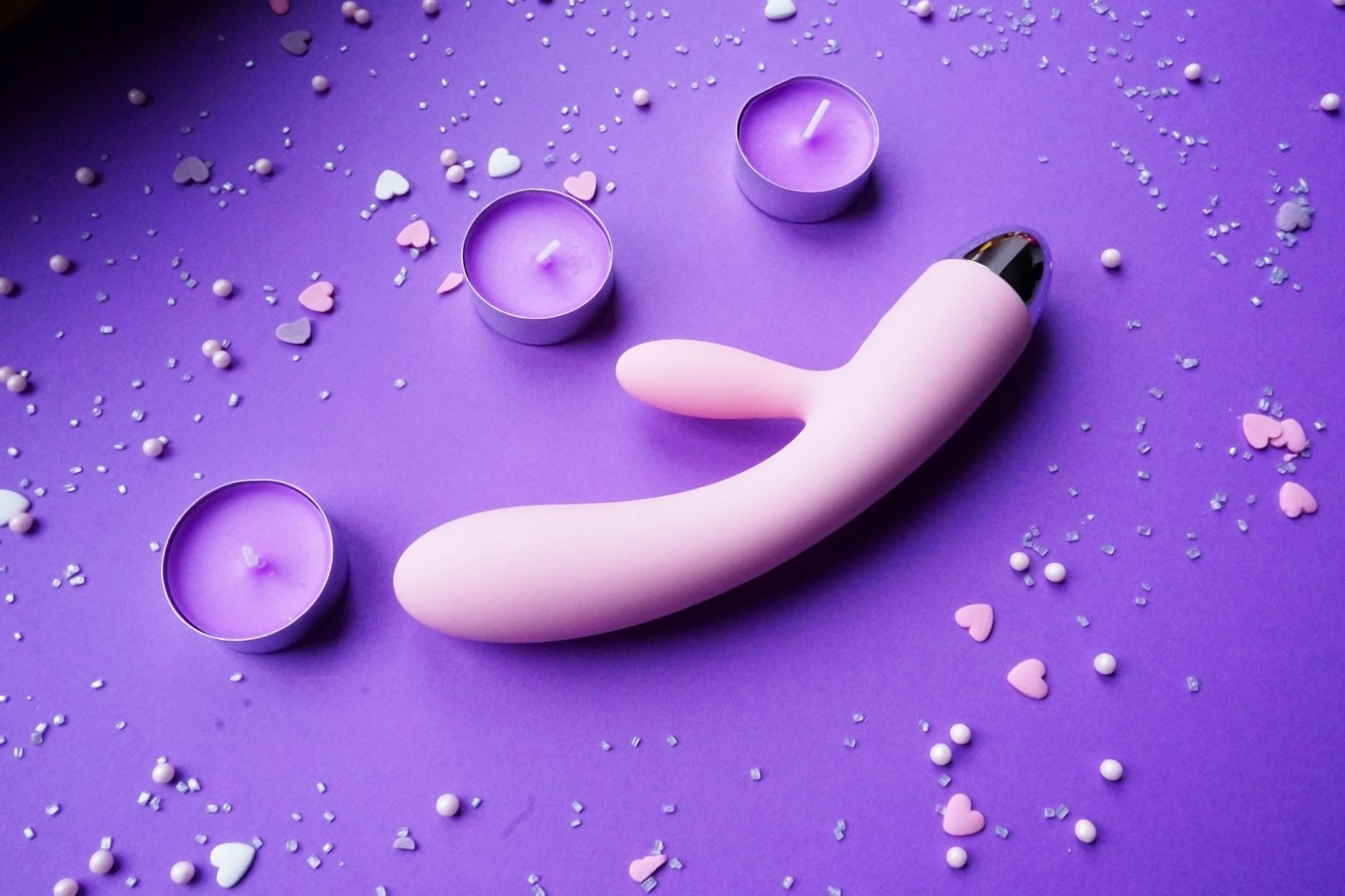
Let's talk about what nobody mentions in the birth control conversation
You started hormonal birth control for a reason. Maybe it cleared your skin, steadied your mood, or just made life simpler. But somewhere in month three or month six, you realized something else changed: you can barely feel anything down there. And nobody told you this could happen.
Here's the thing. Hormonal birth control genuinely dulls clitoral sensation for a significant chunk of people who use it. Not everyone, but enough that it's a documented clinical pattern. And when it happens, standard vibrators often make it worse, not better. A lemon clitoral vibrator changes the equation entirely.
Why birth control actually affects sensation
Hormonal contraceptives suppress the hormones that control your menstrual cycle. As a side effect, they also suppress the hormone fluctuations that affect blood flow and nerve sensitivity throughout your body. Your clitoris depends on reliable blood flow to engorge and respond. When that blood flow gets quieter, sensation gets quieter with it.
There's another layer. Many people report that hormonal birth control flattens emotional arousal too. Less desire, less mental engagement, less of that anticipatory excitement. If your brain isn't signaling "yes, this is good," your body's sensors turn down the volume further. It's a feedback loop.
The weird part? You're not broken. Your tissues still have nerve density. Your capacity for pleasure hasn't gone anywhere. The signal is just being dampened.
Why standard vibrators often don't help
Most vibrators are built for people with robust sensation. They rely on rapid oscillation (usually 50-100 Hz) to create stimulation. If you're already struggling to feel, adding speed or frequency often doesn't land. It can even feel numb or numbing because the stimulus isn't matching what your nervous system can actually register right now.
That's where a lemon clitoral vibrator works differently. The suction mechanism (which Hello Nancy's Lemon uses) creates a gentler, broader pressure that engages more of the clitoral nerve network at once. It's not racing against numbness. It's meeting your tissue where it actually is.
How suction helps where standard vibration doesn't
Think of it this way. A vibrator asks one question: "Can you feel this oscillation?" A suction device asks a different question: "Can you feel this pressure?" For people with dulled sensation, the answer to the second question is often yes when the first is no.
Here's the physiology. The clitoris has around 8,000 nerve endings concentrated in a relatively small area. Suction activates these nerves through sustained pressure rather than speed. It also increases blood flow locally, which helps wake up sensation that's been quieted by hormonal suppression.
Many of my clients who've tried this report that suction actually restores sensation faster than they expected. Within a few weeks of regular use, they notice they can feel more with less intensity. It's not a placebo. It's what happens when you remove friction and add blood flow.
The warm-up principle matters more now
When sensation is dampened, your body needs longer to build arousal. This was true before birth control, but it becomes critical now. I typically recommend 15-20 minutes of foreplay or mental preparation before using a lemon vibrator when you're on hormonal contraception.
This isn't a flaw in the toy. It's you giving your nervous system time to actually show up. Scroll through erotica. Let yourself fantasize without judgment. Breathe. Touch other parts of your body first. By the time you introduce the device, your clitoris has a better chance of registering what's happening.
Why a lemon vibrator is better than switching birth control
I'm not here to tell you to quit your contraception. If hormonal birth control works for you in every other way, the solution isn't necessarily to abandon it. A lemon clitoral vibrator can restore pleasure without requiring you to restart your entire health routine.
That said, if numbness is the only reason you're tolerating your method, talk to your doctor about alternatives. A copper IUD, a progestin-only pill, or even a different hormonal formulation might preserve both your contraceptive coverage and your sensation. Sometimes it takes trying a different brand to find one that works for your body. But while you're figuring that out, a good device helps.
The patience part (and why it matters)
Restoring sensation after hormonal suppression isn't instant. Some people feel a difference in a week. Others need a month or more of consistent use. This is normal and not a sign that the device isn't working. Your nervous system is rewiring its sensitivity baseline. That takes time.
One practical tip: track what you notice over time. Not obsessively, but jot down a few words after each session. "More feeling today" or "still numb but less uncomfortable." The changes are often gradual enough that you won't see them in the moment, but a week of notes makes the trajectory obvious.
Lubrication and tissue care
When sensation is dampened, tissue can also get less attention. Make sure you're using water-based lubricant with a lemon vibrator, even if you don't think you need it. Hormonal contraception can thin vaginal tissue, and a lemon device deserves that care to work properly.
If you're noticing dryness along with numbness, that's another signal to mention to your doctor. Sometimes a local estrogen cream or a different contraceptive can address both at once.
What to expect in the first month
Week one: the lemon vibrator might feel less intense than you'd expect, but that's okay. You're learning what sensation you actually have right now.
Week two to three: you might notice easier arousal or ability to feel the different patterns more distinctly.
Week four and beyond: many people report that sensation starts coming back, sometimes quite noticeably.
Not everyone follows this timeline. Some feel faster shifts. Others need two months. The point is to show up consistently and let your body catch up.
When to loop in a partner
If you're with someone, this is worth talking about beforehand. "My birth control is affecting my sensation, and I'm trying something new to help" is a complete sentence. You don't owe detailed explanation. What you might owe is patience with yourself while your body adjusts, and your partner owes you space to figure out what works without performance pressure.
Some couples use this as a chance to explore differently together. Less about whether they can make you come fast, more about how pleasure feels when you slow down and pay attention. That reframing often helps both people.
When to talk to your doctor
If numbness persists beyond six weeks of consistent device use and hasn't improved at all, mention it to your prescriber. Sometimes it's the specific formulation. Sometimes you need a dosage adjustment. Sometimes you need to switch methods entirely. There's no virtue in suffering through a contraceptive that's killing your pleasure if other options exist.
Likewise, if you notice vaginal dryness, pain, or tissue thinning alongside the numbness, don't wait. Those are addressable issues that often have straightforward solutions.
The larger truth
Your pleasure matters. If your birth control is working for everything else but dampening sensation, that's information worth acting on. A lemon clitoral vibrator isn't a band-aid. It's a bridge back to your body while you figure out the contraceptive equation. And often, it's all you need.
People also ask
How long does it take for sensation to return after stopping birth control?
It depends on how long you were on it and your individual body, but most people notice improvement within two to four weeks of stopping hormonal contraception. Some feel changes faster. If you're switching to a different contraceptive, the timeline might be different depending on whether your new method is hormonal. A lemon vibrator can help during that transition period.
Can I use a lemon vibrator while still taking hormonal birth control?
Absolutely. A lemon clitoral vibrator works great while you're on birth control and helps restore pleasure even when hormones are suppressing sensation. You don't have to choose between contraception and pleasure. Plenty of people use lemon vibrators long-term while staying on their preferred birth control.
Why does suction work better than vibration for dulled sensation?
Suction creates steady pressure that activates more of the clitoral nerve network at once, while vibration relies on speed to create sensation. When your nerves are dampened by hormonal suppression, pressure is easier to register than oscillation. Suction also increases local blood flow, which wakes up sensation naturally.
Is clitoral numbness from birth control permanent?
No. Once you stop hormonal contraception or switch methods, sensation usually returns over weeks to months. Even while you're still taking birth control, a good lemon vibrator can help restore pleasure by meeting your current sensitivity level. You're not stuck.
Will my partner be able to feel a difference if I use a lemon vibrator regularly?
Sometimes, yes. As sensation returns, you'll likely be more responsive to manual touch and partnered sex too. But the bigger difference is how you feel. More pleasure for you. That's the win. If your partner notices you're more relaxed or present, that's a bonus.
What if a lemon vibrator still doesn't help?
If you've given it four to six weeks of consistent use and feel no change, talk to your doctor. It might be a sign that this particular birth control method isn't right for your body, or there could be another factor at play. You deserve to feel pleasure. If one solution isn't working, there are others.
The bottom line
Birth control dulls sensation for real reasons. A lemon vibrator is specifically designed to cut through that dullness. Give yourself time, use it consistently, and trust that your pleasure is worth the effort to restore. You're not broken. You just need the right tool for where your body actually is right now.