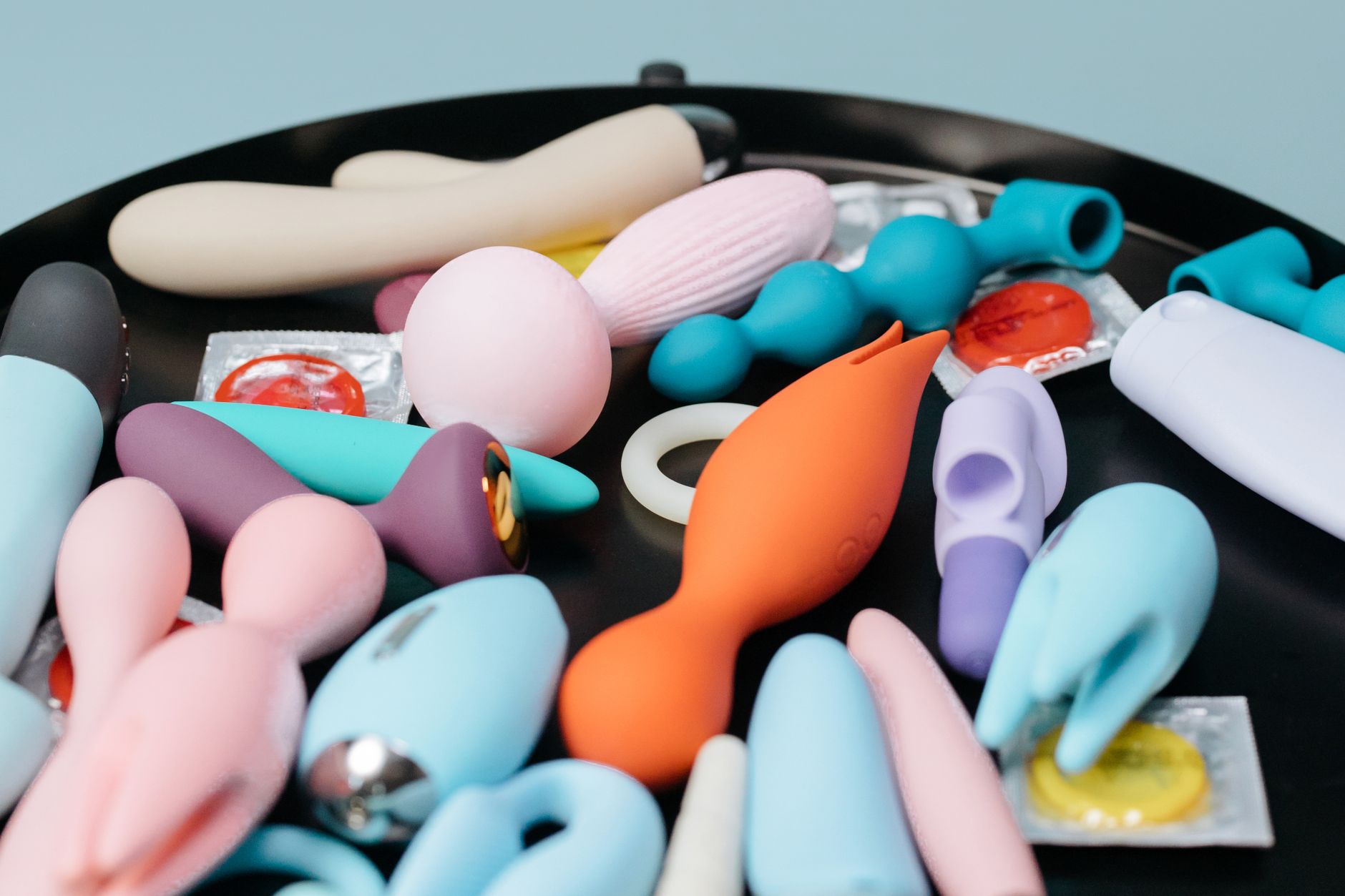
How Lemon Vibrators Help When Antidepressants Affect Your Pleasure
Let's be real. SSRIs save lives. They pull people out of depression, anxiety, and suicidal thinking. They're one of the most prescribed medications in the world. And they absolutely wreck sexual pleasure for somewhere between 40 and 60 percent of people taking them.
That trade-off feels impossible to articulate to anyone who hasn't lived it. You get your mind back. You lose your body. Your libido vanishes. Orgasms take 45 minutes or never arrive at all. Your partner tries, you try, and nothing works. You end up choosing between your mental health and your sex life, and nobody warns you that's the choice you're making.
Here's the thing that most doctors don't mention: there are actually effective workarounds. Lemon clitoral vibrators, specifically, work differently than most pleasure tools when you're on antidepressants. Understanding why can give you back something that felt permanently lost.
Why SSRIs destroy sexual response in the first place
SSRIs work by raising serotonin levels in your brain. That's what gets you out of depression. But serotonin also controls several systems that have nothing to do with mood: blood flow, nerve sensitivity, and the cascade of neurochemical events that trigger arousal and orgasm.
When serotonin is high, your sexual response system gets dampened. Blood doesn't flow as easily to the genitals. Your clitoris becomes less sensitive. The neural signals that usually build toward orgasm get muddied. Some people describe it as feeling numb. Others say arousal starts but never builds, like trying to climb a hill that keeps getting steeper.
The cruelest part is that it's not a motivation problem. It's not about desire or emotional connection. Your brain literally stops receiving the signals that pleasure is happening. You could have the most attentive partner in the world and your body would stay a step behind, unable to catch up.
This is called SSRI-induced sexual dysfunction, and it's shockingly common. Doctors know about it. They just don't talk about it much, which leaves most people thinking they're broken.
How lemon vibrators change the equation
A lemon vibrator, particularly an air-suction style like the Lem, works through direct mechanical stimulation combined with consistent, targeted pressure. Here's why that matters when you're on SSRIs.
Regular vibration is frequency-based. It sends waves of stimulation at a set rate, usually 50 to 100 Hz. Your desensitized clitoris has to interpret those waves as pleasure signals. When your serotonin is elevated, that interpretation is impaired. The signal gets lost in translation.
Suction-based stimulation works differently. Instead of waiting for your nervous system to decode a vibration pattern, it creates a pressure seal around the clitoris that directly draws tissue into the cup. This isn't subtle. It's a physical event your body has to register, regardless of how muffled your nerve sensitivity might be from the medication.
Many people describe it as the only type of stimulation that "gets through" the SSRI fog. It's not gentler. It's not more refined. It's just more... unavoidable.
The pressure and persistence advantage
When you're on an antidepressant, stimulation that relies on building sensation doesn't work well. You need something that creates an immediate, persistent sensation that doesn't fade or require your body to "join in."
Lemon clitoral vibrators apply steady pressure with a rhythmic pulse underneath it. That combination is harder for SSRI-dampened sensation to ignore. Some people who've struggled to orgasm for years on SSRIs report that they finally have success with this specific type of toy.
The intensity matters too. You're not being "too rough" or "doing it wrong." Your nervous system genuinely needs more direct input to register pleasure. A lemon vibrator can deliver that without you feeling like you're fighting your own body.
Timing, patterns, and patience
Here's something doctors don't tell you: timing your pleasure around your medication might help, but it's not reliable.
Some people find that taking their SSRI at night and being intimate in the morning reduces the dampening effect slightly. The logic is sound, the serotonin levels fluctuate a bit across the day. But it doesn't work equally for everyone, and it's not a substitute for actual tools that work.
What does work more reliably is knowing that this is a marathon, not a sprint. When you're on an SSRI, orgasms might take longer. Sometimes 20 minutes. Sometimes 45. That's not failure. That's your new timeline. A lemon vibrator shortens that timeline significantly for most people, but even with one, you might need more time and more sustained focus than you did before the medication.
Your brain needs consistent input. Pausing, stopping, checking in, or second-guessing whether it's working will reset your progress. Set aside time, get comfortable, and let the vibrator do its job without you managing the experience.
Talking to your doctor about this
You don't have to choose between your mental health and your sex life, but you do have to have the conversation.
If sexual dysfunction is affecting your quality of life, tell your psychiatrist or GP. There are options: switching to a different SSRI (some have lower sexual side effects than others), adjusting timing, adding medication, or lowering the dose. None of these are guaranteed, but they're worth exploring.
What you shouldn't do is stop taking the medication or reduce it without medical guidance. That's genuinely dangerous. But that also means getting professional support to troubleshoot, not just accepting that this is permanent.
A lemon clitoral vibrator can work alongside medication adjustments, not instead of them. If your doctor is dismissing sexual side effects as "not a real problem" or telling you to just relax, that's a sign to find a different doctor. Your pleasure matters. Your mental health matters. Both can be addressed.
Building sensation back is a real thing
There's research showing that people who use vibrators consistently while on SSRIs can actually restore some baseline sensation over time. It's not magic. It's basically the principle of neuroplasticity: your nervous system adapts to input.
When you're consistently using a lemon vibrator and regularly experiencing orgasm, your body starts to rebuild that connection between stimulation and pleasure. The pathway doesn't disappear just because the medication is muffling it. It atrophies. Regular use brings it back.
This takes weeks, not days. But many people report that after 4 to 8 weeks of regular use, the vibrator feels more effective. The sensation builds faster. Your body remembers what pleasure feels like.
That's not the medication changing. That's your nervous system recalibrating around reliable input.
When to try something else
If you've been using a lemon vibrator consistently for 6 to 8 weeks and there's absolutely no progress, something else is happening. It could be that your particular SSRI is more dampening than average. It could be that dosing or timing adjustments would help. It could be that an additional medication (like bupropion) would support sexual function.
Or it could just be that suction-based stimulation isn't your tool, which is fine. Some people need wand vibrators instead. Some need clitoral vibrators with different intensities. The point is that SSRI sexual dysfunction is not something you have to accept as permanent.
FAQ
Can I orgasm at all on SSRIs, or is it impossible?
It's not impossible, but it's harder for most people. Anywhere from 40 to 60 percent of SSRI users experience sexual side effects, but that also means 40 to 60 percent either don't experience them or experience them mildly. If you're in the group where it's difficult, that's real and valid. It's also treatable.
Will switching to a different antidepressant help?
Some SSRIs have slightly lower rates of sexual side effects than others. Sertraline and paroxetine are among the worst offenders. Fluoxetine and citalopram are sometimes gentler. But individual variation is huge. What destroys someone else's pleasure might barely touch yours. Talk to your prescriber about options if this is a major issue for you.
How long does it take for a lemon vibrator to actually work?
Most people notice a difference within the first few uses, but it's a different kind of difference. You might notice that sensation is clearer or that you reach arousal faster. Full sensation restoration, where pleasure feels more like it did before medication, usually takes 4 to 8 weeks of consistent use.
Is it normal to need stronger stimulation on SSRIs?
Completely normal. Your nervous system is genuinely less sensitive. That's not a sign you're "too tough" or damaged. It's just what happens when serotonin is elevated. Reaching for a tool that delivers more direct stimulation, like a lemon clitoral vibrator, isn't settling. It's adapting.
Should I mention this to my doctor?
Yes, if sexual side effects are affecting you. Your doctor can help troubleshoot actual medication adjustments. A vibrator is a great tool, but it's not a treatment for the underlying neurochemistry problem. Both matter. Tell your doctor the truth about how much this is impacting your life, because that affects the decisions they can make.
Can I use a lemon vibrator if I'm also taking other medications?
Most vibrators are safe to use regardless of what medication you're taking. They're a physical tool, not a drug interaction concern. That said, if you're on multiple medications or have any health concerns, quick check with your doctor is fine. But this isn't usually a complicated issue.
SSRIs are worth taking if you need them. And your sexual pleasure is also worth protecting. A lemon clitoral vibrator can genuinely help bridge that gap when SSRI side effects have made orgasms feel impossible. You don't have to accept the trade-off as permanent. You just need the right information, the right tool, and some patience while your body remembers what it's capable of.