Let's name the actual thing that's happening
Your partner won't touch a vibrator. Not because they're prudish or insecure (well, maybe a little, but that's not the whole story). Usually it's one of three things: they think it means they're not enough, they're uncomfortable with the technology itself, or they've absorbed some weird cultural messaging about what "real" pleasure should look like. The good news? All three are fixable. The better news? Your pleasure doesn't have to wait while you fix them.
Why partners resist clitoral vibrators
The number-one reason I hear from couples is fear of inadequacy. Your partner has been the source of your pleasure for years. A lemon vibrator feels like a professional replacement. That's not logical, but feelings rarely are. What they're really saying underneath the resistance is "I want to matter to you." That's worth taking seriously, but not at the expense of your own sensation.
The second reason is physical discomfort with the device itself. Some partners find vibrators too intense, too loud, or too visually clinical. A clitoral vibrator like the Lemon is different from traditional wand vibrators. It uses suction, not buzz. It's quieter. It's smaller. These are exactly the things that sometimes make it less threatening once someone actually tries it.
The third reason is cultural baggage. Somewhere along the way, your partner learned that good sex is what happens between two bodies, and anything else is supplementary or desperate. That belief system dies slowly. But it does die, especially when your partner sees you light up.
The conversation before you even introduce the device
Don't ambush them with a vibrator. Have the conversation first, and have it outside the bedroom when you're both calm and clothed.
Start with what's true for you: "I want to feel more sensation when we're together, and I've learned that my body responds really well to clitoral stimulation. It's not about you or what you're doing wrong. It's about how I'm wired." That's the opening. You're not saying "I need a vibrator because you're failing me." You're saying "My body has specific needs and I want to meet them."
Then ask what they're actually afraid of. Let them say it. "Does it feel like a threat to you?" "Are you worried it means something about us?" "Is it the way it looks, or the sound, or something else?" Listen without defending. Their fear is real, even if it's not rational.
Then offer what's true: "Using a vibrator during sex isn't replacing you. It's adding something I can't get any other way. You're still here. You're still part of this. And honestly, watching me feel good usually makes it better for you too."
The three-step introduction that actually works
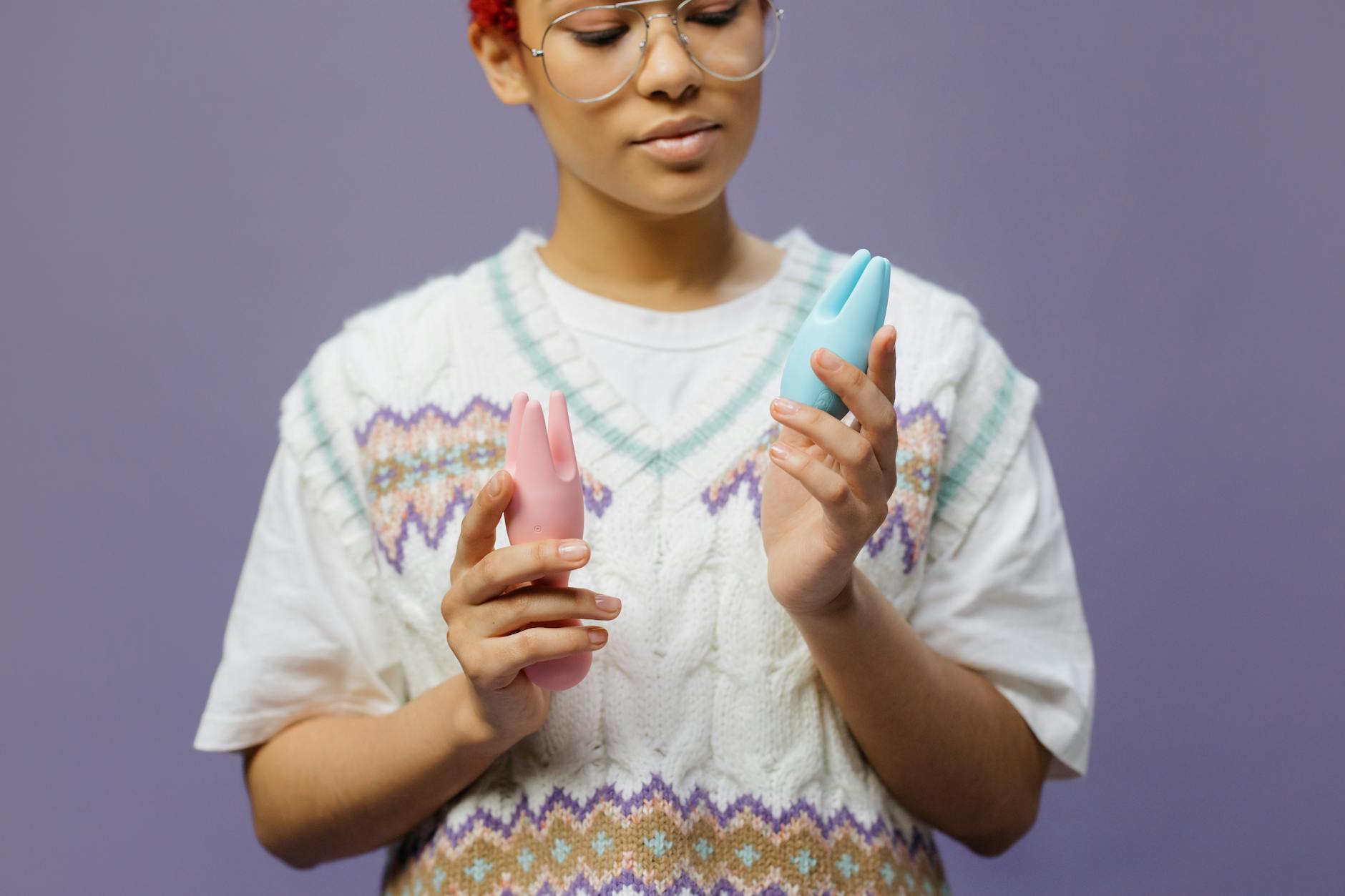
Step one: Show them the device solo. Not during sex. Just hand them a Lemon or a Berri or whatever clitoral vibrator you're using and say "This is what I want to try. Want to see how it works?" Let them hold it. Feel the weight. Watch the silicone. See that it's not some sci-fi intrusion. It's just a tool, and it's actually kind of pretty.
Step two: Let them watch you use it alone. Not for performance. Just use it the way you normally would, and let them be in the room. This takes courage from you. It's vulnerable. But it's also the fastest way to shift their perception from "threat" to "I get to see how my partner actually feels pleasure." That's hot. Even if they don't say it, it usually lands as hot.
Step three: Bring it in together, but give them a job that's not about the vibrator. Have them touch you elsewhere while you use the vibrator on your clitoris. They're still touching you. They're still involved. The vibrator is just handling one specific thing. This reframes it from "vibrator replaces partner" to "vibrator helps partner give me what I need."
When resistance is actually a boundary
Here's the thing I need to say clearly: if your partner is actively hostile toward vibrators and refuses to discuss it, that's not a vibrator problem. That's a communication or control problem, and it deserves its own conversation. Your pleasure matters. If your partner won't engage with that, the issue isn't the device.
But most of the time, the resistance softens once they understand you're not leaving them. You're just adding something. The Lemon or other clitoral vibrators are small enough to integrate seamlessly into partnered sex. They're not replacing anything. They're expanding what's possible.
The practical rhythms that help
Once your partner is willing to try, make it easy. Don't wait for some "special" moment. Use it during regular sex. Use it during foreplay. Use it casually enough that it becomes normal, not a big production. The more it's just another part of what you do together, the less loaded it becomes.
If your partner is still nervous, suggest they guide it. Hand them the Lemon and tell them to try angles and speeds. Give them control. That shifts the dynamic from "I need this instead of you" to "we're figuring this out together."
Quietness helps too. Clitoral vibrators are generally quieter than traditional vibrators. There's less "buzz" and more focused stimulation. That can feel less clinical and more intimate to someone who's already skeptical.
What to do if they still won't budge
Your pleasure is not negotiable. Your partner doesn't have to participate in it, but they don't get to veto it either. If they refuse to engage and refuse to let it go, you have a bigger relationship problem that a vibrator can't solve. But most people, once they see the impact on their partner, come around.
In the meantime, you can use a lemon vibrator solo. When you're alone, you can explore without apology. You don't need permission to know what your body needs.
The shift that usually happens
Most of the time, the conversation and the slow introduction changes things. Your partner realizes you're still present. Still connected. Still theirs. The vibrator is just the vehicle for better sensation. Once they see you actually enjoy it, once they feel the positive shift in your pleasure and your mood, the resistance typically dissolves.
Some partners even ask to be involved more. They want to hold it. They want to choose when to use it. They want to see the effect. That's the turn. That's when it becomes something you do together instead of something one of you needs from outside the relationship.
Your pleasure matters. Your partner's comfort matters too. But they don't get to fight each other forever. The point is finding a path where both can be true. Usually, it's smaller and simpler than you expected.
FAQ
Why does my partner think a vibrator means they're not enough?
It's cultural conditioning. We're taught that sex should be about two people creating pleasure for each other without tools. That's romantic but it's also limiting. Your partner conflates your arousal with their skill, when really arousal is about your neurology and your body's specific wiring. Using a lemon vibrator isn't a referendum on their ability to turn you on. It's just meeting your body where it actually is.
Can we use a lemon vibrator if my partner is completely squeamish about it?
Yes, but gently. Start by using it solo. Let them see it's not scary. Then ask if they'd be willing to try it together without them having to touch it. Over time, once it's normalized, resistance usually softens. But if it doesn't, your pleasure doesn't have to wait. You can use it alone and your partner can either join in or give you space.
Is it normal for partners to feel threatened by clitoral vibrators?
Yes. It's really common, especially if the relationship has had communication gaps around pleasure. Partners often interpret a vibrator as "I need something you can't give me," which triggers inadequacy. But the truth is usually simpler: your clitoris needs direct, focused stimulation sometimes, and that's not a failure of your partner. It's just your body.
How do I bring up wanting to use a lemon vibrator without making my partner defensive?
Timing and framing matter. Have the conversation outside the bedroom when you're both calm. Focus on what you want (better sensation, specific types of stimulation) rather than what your partner isn't doing. Make it clear it's an addition, not a replacement. Offer to go slowly and let them help set the pace.
What if my partner wants to use the vibrator on me but I feel weird about that?
Communicate. Tell them you're nervous and why. Maybe you feel vulnerable. Maybe you're worried about performance. Work through it together. Often, having your partner learn how to use your vibrator on you builds intimacy because they're learning exactly what makes you feel good. It can be powerful.
Can we use a lemon vibrator during partnered sex without it feeling awkward?
Absolutely. Once you've done the slow introduction and your partner has had time to adjust, using a clitoral vibrator during sex often feels completely natural. Many partners find it actually improves their experience because they're not trying so hard to provide clitoral stimulation. Everyone relaxes. Everyone feels better. The awkwardness usually comes from the resistance, not the device itself.