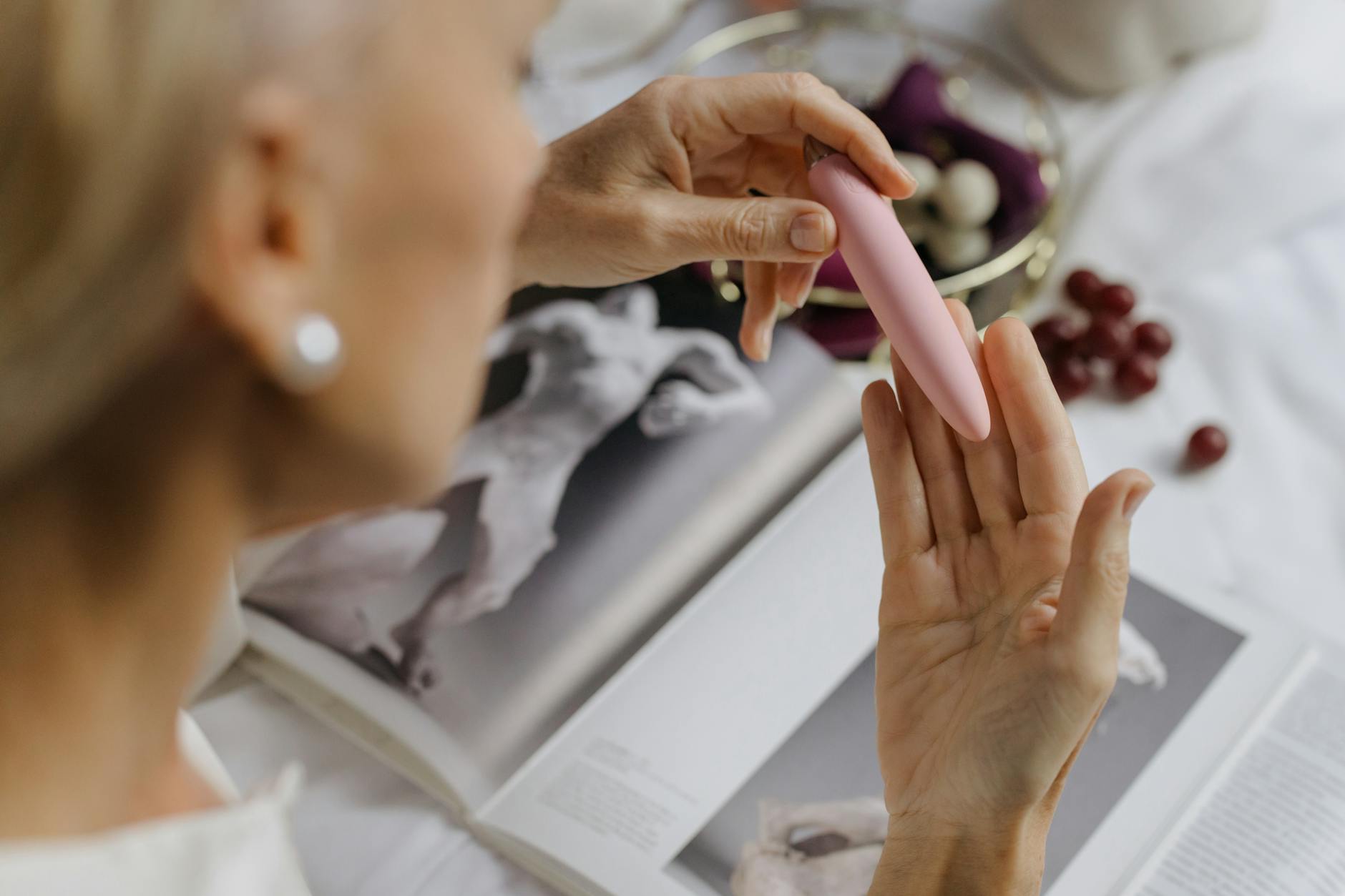
How to Use Lemon Vibrators When Your Body Needs More Time to Warm Up
Let's be real: arousal used to happen faster. A glance, a touch, a thought, and your body was ready. Now you need actual time. And honestly, most people treat this like a problem to solve instead of what it actually is: useful information about what your body needs.
Here's the thing. That slowness isn't a sign of broken desire. It's a sign of what's changing underneath, and understanding it transforms how you approach pleasure. The good news? This is exactly where lemon vibrators shine.
Why arousal takes longer as you age
Your nervous system shifts. Blood flow to the genitals doesn't happen as automatically or as quickly. Hormonal changes (whether from age, medication, or life stress) mean less of the chemicals that trigger that instant spark. Lubrication takes longer to build. The clitoris may need more time to become fully engorged and responsive.
This doesn't mean you can't feel intensity. It means you need a runway.
Most people respond by either pushing through (which leads to frustration) or giving up (which leads to resentment). Neither is necessary. What you actually need is a tool that works with this slower timeline instead of against it.
The physical mismatch between expectation and reality
You remember instant arousal. Your partner might remember it too. So when you're lying there at minute three thinking about nothing, or your partner is ready and you're... not... there's a gap between what used to happen and what's happening now. That gap breeds shame or disconnection.
Here's what I tell my clients: slow arousal is not low arousal. It's just later. The orgasms are still there. The intensity is still there. You just need the runway.
Lemon clitoral vibrators solve this by offering consistent, rhythmic stimulation that doesn't require your body to do all the work. Instead of waiting for natural lubrication, you can use lubricant. Instead of hoping for arousal, you can create the conditions for it.
Why pattern and rhythm matter more than speed
When arousal is slower to build, novelty and rhythm become your friends. The key insight is this: your body doesn't need more pressure or faster vibration. It needs sustained, consistent input that it can sync with.
Lemon vibrators deliver this in a way fingers or spontaneous touch can't. The patterns are repeatable, which means your nervous system can settle into them. That settling is what actually deepens arousal. You're not chasing pleasure. You're building it incrementally.
Start with the lowest setting. Stay there for longer than feels necessary. Let your body acclimatize to the sensation. Then shift the pattern. Then increase intensity. This isn't rushing. This is giving your arousal the structure it needs to climb.
Timing, lubrication, and the rule of preparation
If your body needs more time to warm up, preparation becomes part of the pleasure, not a chore.
Add fifteen to twenty minutes to your timeline before you expect intensity. Use that time for touch that isn't about arousal yet. Kiss. Hold. Be close. Let your nervous system relax. This isn't foreplay in the traditional sense. It's settling in.
Then introduce water-based lubricant before you introduce the vibrator. The lubricant does two things: it removes the friction that your slower-to-lubricate body might create, and it signals to your nervous system that this is a different kind of touch. Something is about to change.
Then introduce the lemon vibrator on the lowest setting. Stay there. Your body will tell you when it's ready to go deeper.
When solo feels different than with a partner
Here's something nobody talks about: the way your body warms up alone is often wildly different from the way it warms up with someone else. Alone, you can take exactly the time you need. With a partner, there's often (even unspoken) pressure to move faster.
Use solo time with lemon vibrators to learn your own timeline. How long does it actually take for your body to feel aroused? What patterns work? At what intensity does it click? This isn't selfish information. This is the map you hand to your partner.
When your partner knows that you need twenty minutes and a specific pattern to build arousal, that's not a limitation. That's an instruction manual. And partners who care actually prefer having that clarity.
The conversation that changes everything
If you're with a partner, say this: "My body's arousal timeline has shifted. This isn't about you or our connection. It's just what's true now. And here's what actually works."
Then show them. Use the lemon vibrator solo first, in front of them if they're interested. Let them see how your body responds. This removes the guesswork and the anxiety. They stop thinking they're doing something wrong. You stop thinking you're broken.
When you bring a lemon clitoral vibrator into partner sex, frame it this way: "This gives me the runway I need. Then we can be together however we want." Some couples use it as foreplay. Some use it to build arousal while they're already touching. Some use it as the main event. None of those is wrong.
Patterns that work when time is needed
Start low. Stay for two to three minutes. Notice what your body does.
Shift the pattern. Notice again. Does it feel like something is shifting inside you? Good. Stay longer.
Increase intensity by one setting only. You're not looking for the maximum. You're looking for the threshold where pleasure starts happening without strain.
Once you find that threshold, you can either stay there (which can build to orgasm on its own) or use it as a platform to go deeper. Your body will tell you which.
The goal is not speed. The goal is finding the point where your nervous system stops working to create arousal and starts receiving it. That's the shift from effort to ease, and that's where everything changes.
When medication or stress is part of the slowdown
Sometimes slow arousal isn't age. It's medication. Antidepressants, blood pressure meds, hormonal birth control, antihistamines—they all change arousal timelines. Stress does too. Cortisol in your bloodstream makes your body defensive, not receptive.
If you suspect medication is the culprit, talk to your doctor. Sometimes a different medication works better. Sometimes the timing of when you take it matters. Sometimes you need to accept the trade-off.
If it's stress, no vibrator will fix that. But a vibrator can still help you access pleasure despite the stress. It's not replacing stress management. It's working alongside it.
The recovery phase after orgasm
One more thing people don't anticipate: if your arousal takes longer to build, your recovery might too. After orgasm, your body might need time before it's ready for more sensation. Respect that. Don't immediately reach for more stimulation. Let your nervous system settle.
This is actually a gift if you can reframe it. It forces you to be present with what just happened instead of chasing the next thing. For a lot of people, that shift from achievement to presence is transformative.
FAQ: When Your Body Needs More Time to Warm Up
How long should warm-up actually take?
There's no universal answer, but fifteen to twenty minutes is common. Some people need longer. Some need less. The question isn't how long should it take. It's how long does yours take. Once you know, you're not guessing anymore. You're planning.
Can a lemon vibrator make arousal faster?
Not faster in terms of time elapsed. But yes, faster in terms of getting to intensity without the frustration. A vibrator can build arousal in ten minutes that might take thirty minutes of traditional touch. You're not skipping the process. You're just making it more efficient.
Is it normal that I need more lubricant than I used to?
Completely normal. Hormonal changes reduce natural lubrication in many people. That's not a sign something is wrong. It's just the reality of how your body is working now. Water-based lubricant is your friend. Use it generously. Your pleasure matters more than whatever narrative says you should be naturally wet.
Should I use a lemon vibrator solo first or with a partner?
Solo first, unless your partner is genuinely curious and you both want to explore it together. Solo gives you permission to take whatever time you need without any feeling of pressure. That's where you learn what actually works. Then you bring that knowledge into partner time.
What if my partner thinks slow arousal means I don't want them?
Then you need a conversation. Slow arousal and desire are separate things. You can want someone intensely and still need twenty minutes to feel it in your body. Say that. Say it multiple times if needed. And if your partner still can't separate those ideas, that's a larger issue than a vibrator can solve.
Does slow arousal mean my orgasms will be less intense?
Not at all. In fact, many people report more intense orgasms when they've had adequate warm-up time. Intensity and speed are different. You can take your time and still arrive somewhere powerful.
The conversation with yourself
Most of my work with clients around this issue isn't about the vibrator. It's about permission. Permission to need what you need. Permission for your body to work differently than it used to. Permission to use a tool that helps instead of reading it as failure.
Your body isn't broken because arousal takes longer now. It's adapting. And you get to adapt too. That might mean more foreplay, more lubricant, more time, a different tool, or a combination of all of those.
The lemon vibrator is just one option. But it's a really good one when your body needs a runway. It's consistent. It's patient. And it works with your timeline instead of against it. Sometimes that's exactly what gets you back to feeling good.