Here's what usually goes wrong
One partner wants to introduce a toy. The other hears it as "you're not enough." Suddenly you're not talking about vibrators anymore. You're having a conversation about inadequacy, trust, and whether the relationship is in trouble. Sound familiar?
This is why so many couples skip the conversation entirely. It feels too risky. But skipping it means one partner stays frustrated and the other stays confused about why their needs keep getting dismissed. Neither of you wins.
The truth is simpler than it feels: skepticism about toys isn't usually about the toy. It's about feeling replaced, or worried, or unsure what the toy means about them or the relationship. Once you understand what's actually driving the resistance, you can address it directly. And that changes everything.
Why partners resist vibrators (and it's rarely what you think)
I've worked with hundreds of couples navigating this, and the resistance usually falls into three buckets.
"I'm worried this means I'm not enough." This is the big one. Your partner has absorbed a cultural message that real sex is friction between two bodies, and that vibrators are either a backup plan or proof that they're failing you. Introducing a toy can feel like evidence in a trial they're already convinced they're losing. Even if they love you, even if the relationship is solid, that fear sits underneath everything.
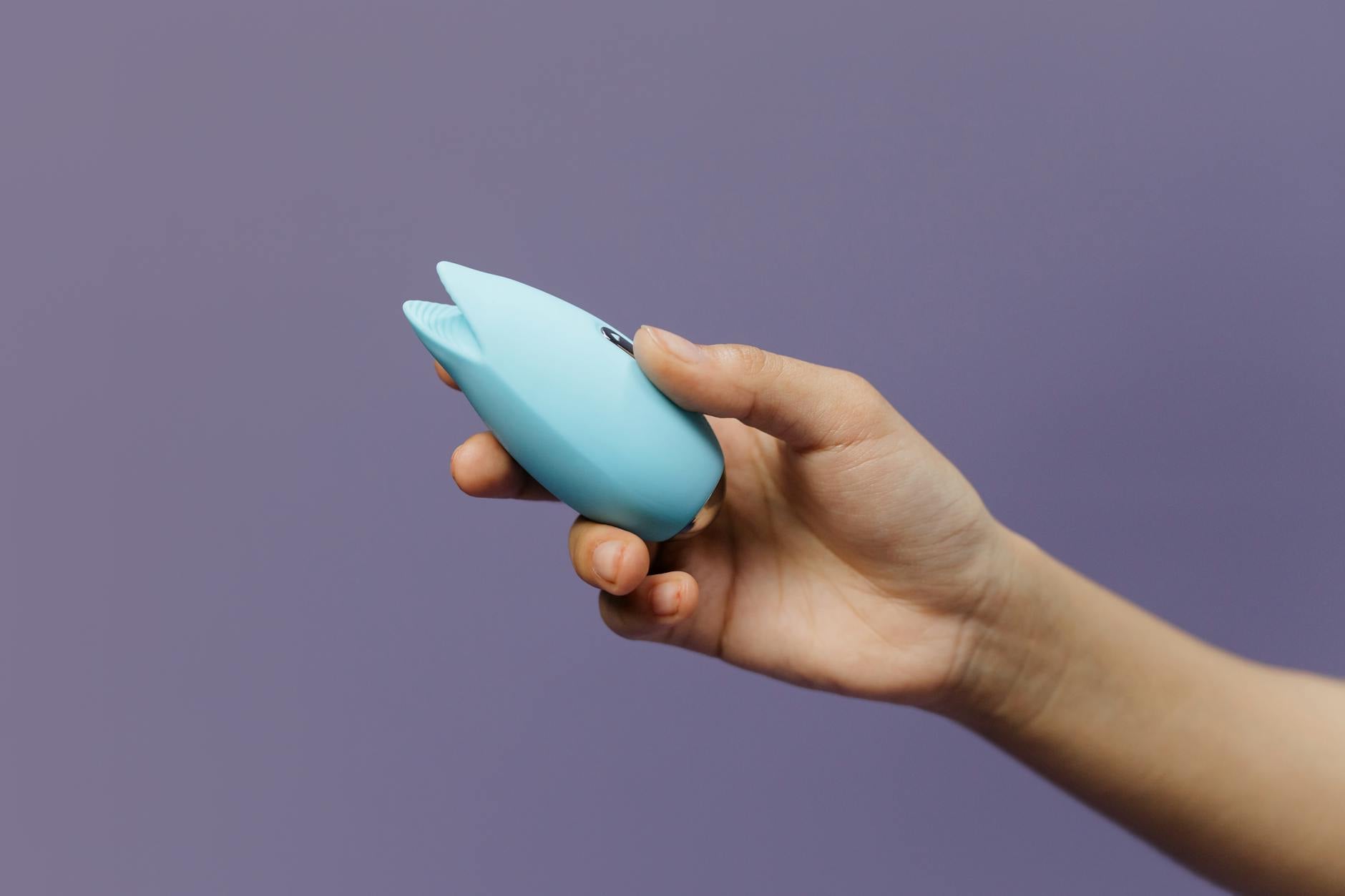
"I don't know what role I play if there's a toy involved." Some partners genuinely don't know where they fit. If you're using a clitoral vibrator like the Lemon, where does your partner's body go? What are they supposed to be doing? The logistics feel confusing, which makes the whole thing feel wrong.
"I'm not sure I want to know what you need." This one's quieter but real. Sometimes partners resist because learning that you need something different than what they've been providing feels destabilizing. It means the map they've been using isn't accurate. It means paying attention to something new. That takes work, and not everyone's ready.
None of these reasons are about you or your desire. They're about their own story about what sex should look like, and what your desire means about them.
The timing conversation (yes, this matters)
Let's skip the moment right before sex. You don't want to introduce this idea when either of you is already aroused, tired, or distracted. You're not asking for a decision. You're asking for an opening to a conversation.
Pick a quiet morning over coffee, or a drive, or a walk. Somewhere you're both calm and there's no exit strategy (which sounds intense, but a walk is just long enough to get through the awkwardness without it feeling staged). Say something like: "I want to talk about something that's been on my mind. Not right now. Just... sometime soon. Are you okay with that?"
This tells them something real is coming, gives them a heads-up, and lets them prepare mentally. People resist less when they're not ambushed.
The script that actually works
When you sit down, lead with your own body, not the toy. Here's the shape of it:
"I've been thinking about my pleasure, and I want to be more intentional about what I actually need. One thing I've realized is that my clitoris responds really well to suction and gentler sustained pressure, which is different from the kind of stimulation I usually get with partners. It's not that anything's wrong. It's just... new information about me. And I want to explore it. Would you be interested in exploring it with me?"
Notice what this does: it centers you and your body, not the toy. It frames exploration as something you're doing together, not something he's failing at. It's honest without being accusatory.
Then pause. Let him process. He might say "yes, but I have questions." Perfect. Questions mean engagement. Answer them directly.
If he says: "You want to use a vibrator?" You say: "I want to try one, yeah. I've been reading about how clitoral vibrators like lemon vibrators work, and I think it might help me understand my own body better. I'd love it if you were part of that."
If he says: "Does that mean I'm not enough?" You say: "Not even close. This is like... you know how some people need glasses to see clearly? This helps me see my own pleasure more clearly. That's the only thing it means."
If he says: "I don't know what I'd be doing." You say: "You'd be there with me. You could touch me, kiss me, be inside me while I use it. Or you could watch and learn what I like. Or we could experiment and figure it out together. The point is you're part of it."
These scripts work because they're honest and specific. They're not defensive. They're not dismissive. They're just clear.
Where the skepticism actually shifts
Here's the thing nobody tells you: most skeptical partners become enthusiastic supporters once they see their partner actually enjoying themselves. Pleasure is contagious. Watching someone you love have a really good orgasm is almost always hotter than you'd expect. The resistance often melts once there's proof that this isn't a threat. It's the opposite.
So the first time, keep expectations low. You're not trying to have the most amazing sex ever. You're trying to show your partner that this tool makes you feel good, and that they're still central to that experience. That's all.
Consider starting with a partner present but not directly involved. You use the lemon clitoral vibrator while your partner watches, or while you're being touched in other ways. This lets them see the physical response, experience the pleasure shift, and understand where they fit. After a few rounds of that, introducing it during partnered sex feels natural instead of threatening.
The conversation after (this matters too)
Once you've actually tried it, debrief. Ask your partner what was going through their head. Listen without defending. If they say "I didn't like watching," that's data. "I actually loved that," that's also data. "I felt useful," or "I felt invisible," those are all real reactions worth discussing.
During sex isn't the time to solve relationship stuff. After is. Say something like: "I loved that you were with me. I want to keep exploring this. What would feel good to you?"
This flips the script from "your partner is resisting your needs" to "we're both figuring out what works for us." Which is actually true.
When skepticism is something deeper
If your partner refuses the conversation entirely, becomes angry, or uses phrases like "I would never," this might not be about toys. It might be about control, or shame, or a fundamentally different approach to sex and bodies. That's relationship work bigger than introducing a vibrator.
If you're stuck here, it's worth talking to a couples therapist. Not because something's broken. But because a good therapist can help you both understand what's underneath the resistance. Sometimes it's fixable. Sometimes it's information that needs to inform bigger conversations about compatibility.
The real win
The win isn't that your partner suddenly loves vibrators. The win is that you had a hard conversation, stayed connected through it, and learned something about each other. You learned that your partner's nervous system is in the room with you. That they're paying attention. That they want to understand you, even when it's uncomfortable.
That foundation is everything. A lemon clitoral vibrator is a tool. But the conversation about it is intimacy. And intimacy is what makes partnered sex actually good in the long run.
Start there. The rest follows.
People also ask
How do I bring up vibrators without my partner thinking I'm unhappy with them?
Frame it as self-discovery, not criticism. Say something like: "I've been learning more about what my body actually responds to, and I'm excited to explore that. I want to do it with you." This centers your curiosity, not their failure. People are way less defensive when the conversation is about you getting to know yourself better, not about them not being good enough.
What if my partner agrees but then seems uncomfortable during sex?
Stop. Check in. Ask what's happening. Discomfort during sex is information. Maybe they're feeling left out, or watching feels weird, or the vibe just shifted. Don't push through it. The conversation is more important than the orgasm. Pause, talk, and figure out what would feel better. You might need to try a different approach, or a different time. Comfort matters more than progress.
Can I use a lemon vibrator while my partner is inside me?
Yes, absolutely. Many couples find that using a clitoral vibrator during penetration actually increases pleasure for both partners. The vibration can feel good through shared sensation, and it often helps with arousal and orgasm. Just communicate about positioning and let your partner know what you're trying. Start slow and adjust based on what feels good.
What if my partner wants to use the vibrator on me but doesn't do it the way I like?
Show them. Literally guide their hand. Say "a little softer" or "move it this way." This isn't criticism. It's collaboration. Your partner probably wants to get it right but doesn't know what they're looking for. Most people are relieved to have direction. It takes the guessing out of it.
Is it normal for my partner to feel threatened by a toy?
Completely normal. Toys represent change, and change is scary. Your partner might worry they're being replaced, or that their body isn't enough, or that you've outgrown them. These are real fears, even if they're not accurate. The best response is patience and reassurance. Show them through your actions that they're still central to your pleasure. And if communication keeps breaking down, consider reading about how to reconnect after emotional distance, which addresses deeper patterns that might be underneath toy resistance.
How long does it usually take for skeptical partners to come around?
It depends on what's driving the skepticism. Some partners shift after one honest conversation and one positive experience. Others need more time to process. A few need professional help to work through what the toy actually represents to them. There's no timeline. The point is showing up and staying curious about each other instead of sliding into defensiveness. That's what actually changes minds.
The bottom line
Your partner's skepticism isn't a wall. It's a conversation waiting to happen. Have it with patience, specificity, and genuine curiosity about what's actually scaring them. Then show them through your pleasure and their involvement that toys aren't a threat. They're an expansion. Once your partner sees that, sees you lit up and present and exploring, the resistance usually melts. Because what they actually want isn't for you to have less pleasure. They want to be part of it.
Start the conversation this week.