
Let's name what's actually happening
Penetration hurts. Maybe it's always hurt, or maybe it started recently. Either way, you're probably telling yourself a story about what that means. That story is almost certainly wrong.
Here's what I know from two decades of working with couples: pain during penetration doesn't mean your body is broken. It doesn't mean you're not attracted to your partner. It doesn't mean you need to white-knuckle through it for someone else's sake. And it absolutely doesn't mean you can't have incredible, full-body orgasms.
What it does mean is that penetration, right now, isn't the right tool for your body. And that's exactly what clitoral vibrators like those from Lemons Vibrators are built for.
Why penetration pain happens (and why it matters)
There are three main reasons penetration becomes painful, and they're all treatable.
Physical tension. Your pelvic floor muscles tighten as a protective response. This can happen from stress, past pain, medical conditions like endometriosis, or even just anxiety about pain itself. It becomes a loop. You expect it to hurt, your body tightens, it hurts more, and next time you're even more guarded.
Insufficient lubrication or arousal time. Rushing into penetration before full arousal means less natural lubrication and less tissue expansion. This is incredibly common and completely fixable.
Structural or hormonal factors. Scarring, vaginal dryness from hormonal changes, or underlying conditions like vaginismus or vestibulodynia need medical attention. If you haven't seen a pelvic floor physical therapist or gynecologist, that's the first step. Full stop.
But here's the thing: while you're sorting out the medical piece, your pleasure doesn't have to wait. Clitoral stimulation works independently of penetration. Your clitoris doesn't care whether penetration is comfortable. It just wants attention.
The clitoral vibrator advantage when penetration is off the table
Clitoral vibrators give you several things penetration doesn't when there's pain involved:
No pressure on painful areas. You control exactly where sensation goes. A Lemon clitoral vibrator from Lemons Vibrators focuses stimulation on the external clitoris, bypassing whatever tissue is tender.
Consistent, predictable sensation. You're not managing someone else's timing or depth. You're not bracing for pain. You can relax completely, which paradoxically makes pleasure more accessible.
Faster pathway to orgasm. The clitoris has around 8,000 nerve endings concentrated in a small area. Direct, sustained stimulation gets results. For people with penetration pain, this often means the first orgasms they've had in months or years.
Permission to prioritize your body. Using a lemon sucker or vibrator sends a message to your nervous system: your pleasure matters more than someone else's preference. That's not selfish. That's survival.
How to use a lemon clitoral vibrator when penetration feels impossible
Start solo. I mean this seriously. Before involving a partner, spend time relearning what feels good without the anxiety of "Will this hurt?" or "Is my partner enjoying this?"
Set aside 20 minutes when you're genuinely relaxed. Not rushed. Not trying to fit it in before sleep. Choose a pattern on your vibrator that feels light. Many people go straight to high intensity and then wonder why everything goes numb. Start at pattern 1 or 2 on a Lemon vibrator and build from there.
Lube helps even when there's no penetration involved. Water-based works beautifully with silicone toys. It reduces friction and helps the vibration travel smoothly across the tissue.
Experiment with angle. The underside of the clitoral hood, the outer edges, direct contact. Different angles create different sensations. You're not looking for one "right" way. You're mapping what works for your body right now.
When you're ready to involve a partner, start with conversation, not touch. Tell them what you've discovered. What patterns feel best, what intensity works, where your body is sensitive. Make it collaborative rather than instructional. "I found that pattern 3 feels amazing" is very different from "You're doing it wrong."
Using lemon vibrators with a partner when penetration isn't an option
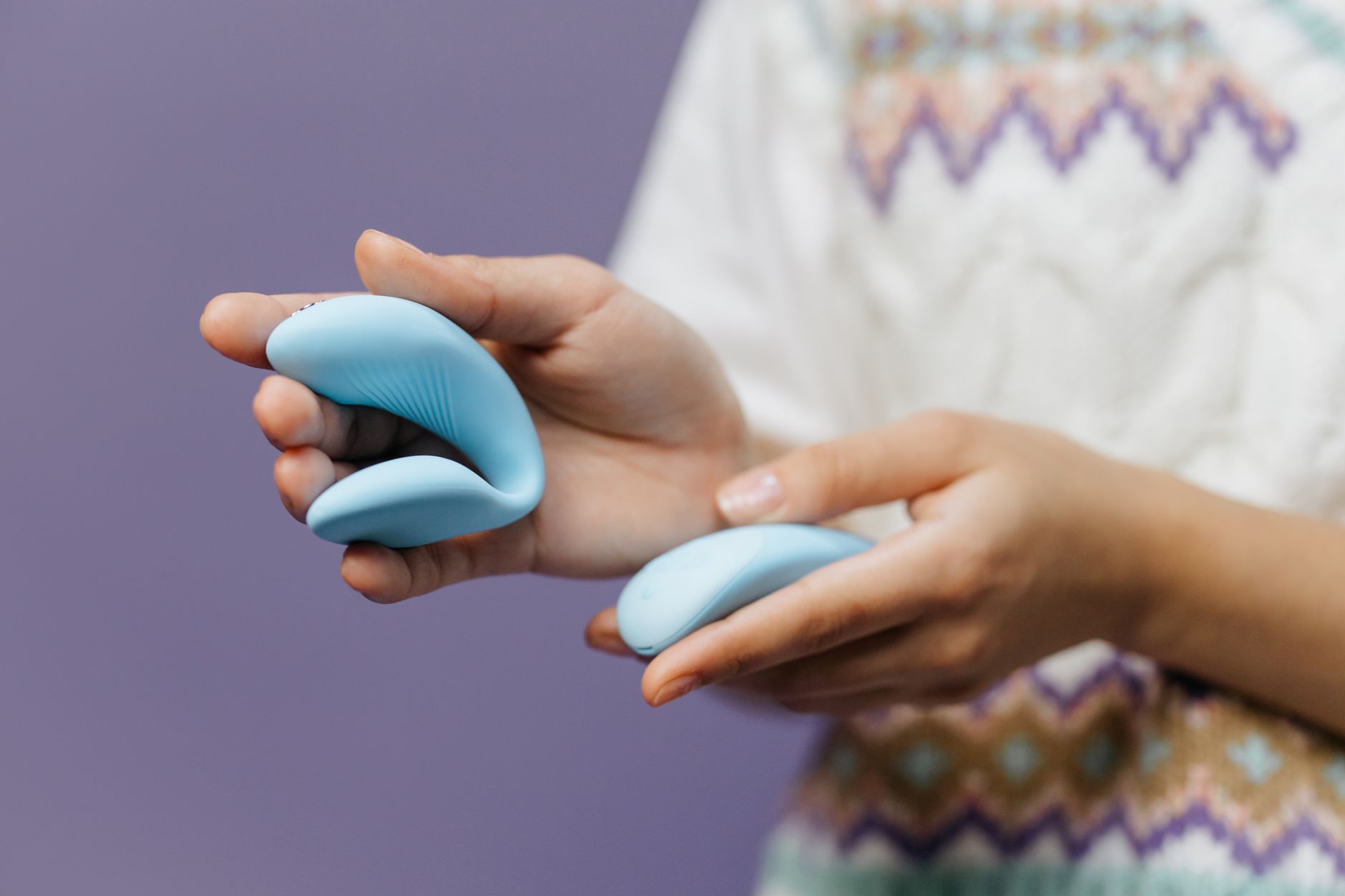
Photo by cottonbro studio on Pexels
Most couples make one crucial mistake: they treat the vibrator as a substitute for penetration, something to "get the job done" before moving on to the "real thing."
If penetration is painful, it's not the real thing. Clitoral pleasure is.
Instead, integrate the vibrator into foreplay and intimacy. Your partner can use it while you're kissing, while they're inside you vaginally (if that's comfortable), or while you're doing something else entirely. The vibrator becomes part of the experience, not a workaround.
If your partner is worried about their role, remember this: using a Lemons Vibrators clitoral vibrator together is intimate. You're watching each other respond. There's vulnerability and trust involved. It's not less partnered. It's differently partnered.
Some couples find that external clitoral stimulation is actually more connected than penetration ever was. You can make eye contact. You're both present. There's less performance pressure and more genuine sensation.
When to rebuild toward penetration (and when to skip it entirely)
If your penetration pain is from pelvic floor tension or anxiety, physical therapy plus regular clitoral stimulation can help. The nervous system learns that penetration doesn't have to hurt. But this takes time. Weeks or months, not days.
Use the vibrator without pressure. No "we should eventually do penetration." Just enjoy what works. Over time, as your nervous system relaxes and your pelvic floor releases, penetration might become comfortable again. Or it might not. And that's completely fine.
I've worked with many couples who discovered that they prefer clitoral stimulation to penetration. Years of pain had conditioned them to avoid it, but once they tried a vibrator without that baggage, they realized it was just never their thing. That's valid. Your pleasure matters. Full stop.
Positioning and comfort when using lemon suckers or clitoral vibrators
Pain creates bracing. Your shoulders go up, your jaw tightens, your legs clench. These small tensions block pleasure because your nervous system is still partially in protection mode.
Before you even touch yourself, get comfortable. Lie on your back with a pillow under your hips. Or sit propped against pillows. Or kneel. Find a position where nothing hurts and nothing requires effort to maintain.
When you apply the vibrator, keep your pelvic floor deliberately relaxed. This is harder than it sounds because you're probably used to tensing during sexual activity. It helps to breathe deeply and remind yourself: tension is optional right now. Relaxation is the goal.
If you're with a partner, tell them to watch for signs of bracing. If your shoulders creep up or your thighs clench, that's useful information. It means something is triggering protection mode, even if it doesn't hurt. Pause and reconnect with relaxation.
The mental shift that changes everything
Here's what most people get wrong: they think the vibrator is for when penetration doesn't work. But the vibrator isn't a backup plan. It's often the main event.
Your clitoris has more nerve endings than any other part of your body. It's designed for pleasure in a way that most of penetration isn't. If penetration pain has kept you from accessing that, a clitoral vibrator from Lemons Vibrators isn't settling. It's finally getting to the thing your body actually wants.
I've seen clients cry when they have their first pain-free orgasm. Not because it was so intense, but because they finally believed their pleasure was possible. That their body wasn't broken. That they weren't broken.
You're not either.
People also ask
Can you use a lemon vibrator if you have vaginismus or pelvic floor dysfunction?
Yes, but carefully. If you have vaginismus, penetration is reflexively painful or impossible. Clitoral vibrators work beautifully because they avoid the vaginal opening entirely. However, even clitoral stimulation can sometimes trigger pelvic floor tension if your nervous system is very guarded. Start with light patterns and focus on relaxation. Work with a pelvic floor physical therapist simultaneously. They can teach you how to consciously relax during stimulation, which is the skill that eventually allows penetration to become comfortable.
Is it okay to only use clitoral vibrators and avoid penetration entirely?
Absolutely. Some people have medical reasons to avoid penetration (chronic pain, trauma recovery, physical limitations). Some people just prefer clitoral stimulation. Both are completely valid. Your sex life doesn't need penetration to be fulfilling, connected, or satisfying. Many couples discover that clitoral-focused pleasure is more intimate and more orgasmic than penetration ever was.
How long does it take for penetration to stop hurting if I use a vibrator regularly?
It depends on the cause. If it's purely anxiety or pelvic floor tension, you might feel a shift in weeks with a combination of vibrator use and pelvic floor relaxation practice. If it's hormonal, scarring, or a structural issue, it takes longer and usually requires medical intervention alongside pleasure work. There's no timeline. Listen to your body. Progress isn't linear.
Can my partner use a lemon clitoral vibrator on me, or should I do it myself?
Both work. Many people find that self-use gives them more control and less pressure to climax, which is useful when you're rebuilding trust in your body. But partner-use can be incredibly intimate if you communicate clearly about what feels good. Start with solo exploration so you know what you like, then show your partner. That way you're collaborating rather than asking them to guess.
What if a vibrator feels too intense when I have penetration pain?
Start with the lowest setting and longest duration between uses. Your nervous system might be hypervigilant from pain, which makes even gentle stimulation feel overwhelming. That settles with time and consistency. You can also try a different vibrator shape. Some people find that a smaller, quieter vibrator like a lemon sucker feels less intense than a larger wand. Experiment with water-based lube, which can make sensation feel smoother and less jarring.
Should I tell my partner about penetration pain before trying a vibrator together?
Yes. Absolutely yes. This isn't something to spring on them mid-intimacy. Have the conversation when you're both clothed and calm. Explain what you've discovered, what feels good, and that you want to explore this together. Most partners are relieved. Many have been worried that penetration pain meant you weren't attracted to them. Talking about what actually works is connecting, not rejecting.
Your body knows what it needs. A clitoral vibrator from Lemons Vibrators is just the tool that lets you listen to it without shame or compromise. Start there. Everything else follows.