
Let's talk about what happened
Something shifted in your relationship. Maybe it was a fight that didn't fully resolve, a long stretch of disconnection, or the slower fade that happens after years together. And somewhere in that shift, your orgasms stopped feeling like they used to. Not gone. Just... quieter. Smaller. Like someone turned down the volume on what used to be unmistakable.
You're not broken. Your body didn't change. What changed is the neural pathway between emotional safety and physical sensation. That connection is real, measurable, and fixable.
Why relationship changes flatten pleasure response
Here's the science part that actually matters: arousal isn't purely physical. It's a three-part system: your nervous system, your brain's emotional state, and the message your body is receiving from your partner (or yourself, if you're solo). When one of those three signals conflict, pleasure gets fuzzy.
When emotional distance enters a relationship, your nervous system stays half-activated. You're not fully in fight-or-flight, but you're not in genuine rest-and-digest either. You're stuck in the middle. That in-between state means your body can get aroused mechanically, but the kind of deep, full-body orgasm that requires complete nervous system trust becomes much harder to access.
Relationship tension also does something specific to genital sensation. The pelvic floor tightens (often without you noticing). Blood flow gets redirected away from sexual tissue toward your limbs and core. Your clitoris becomes less engorged, which means less sensitivity to touch. You can stimulate it directly and feel almost nothing. It's not numbness. It's your nervous system protecting you.
The role of emotional safety in sensation
I work with couples where one partner says "I just can't feel anything anymore," and the other partner thinks they're being rejected. Usually, what's happening is the first partner's body has literally downregulated sensation as a protective measure. The brain knows something isn't safe (emotionally), so it mutes the signals. It's not intentional or fixable with more direct pressure.
This is why trying harder, changing technique, or asking your partner for rougher stimulation usually fails. You're trying to hack a biological response by pushing harder on a system that's actively suppressing input.
What works instead is rebuilding the signal at the source. And that's where solo practice comes in.
Why lemon vibrators rebuild intensity better than hands or toys that just vibrate
A Lemon clitoral vibrator uses suction, not vibration alone. The difference matters for exactly this situation.
When your clitoris is in a protective state, it responds better to gentle, building pressure than to percussion. Suction creates a sealed chamber of pressure that stimulates the clitoris without requiring direct friction. It's less invasive-feeling, which means your nervous system is more likely to relax into it.
Second, suction creates a feedback loop. As you start using it, blood flow returns to the tissue. More blood flow means more sensitivity. More sensitivity means more pleasure. That crescendo is exactly what your brain needs to believe that sensation is safe again.
The lem vibrator also lets you control intensity in tiny increments (patterns 1 through 8). You're not locked into "medium" or "high." You can start at a barely-there pressure and spend 10-15 minutes coaxing your clitoris awake, which is the opposite of the rough, fast approach that fails when you're in a protective state.
Starting the rebuild
Set aside 20-30 minutes when you have real privacy and no time pressure. The pressure matters. Your body needs to know nothing else is waiting.
Start with the lem vibrator on pattern 1 or 2. Don't jump to higher settings hoping to "find" the sensation faster. That's the old framework. Instead, hold it on your clitoris for a full 5 minutes on pattern 1. Just let it be there. Your nervous system will start to recognize this as safe input. Blood flow will increase. Sensation will deepen.
Move to pattern 3 or 4 for another 5 minutes. You're not trying to finish. You're rebuilding trust between your brain and your body. Most people notice that by minute 15-20, something shifts. The sensation becomes unmistakable. Not because you finally found the "right" button, but because your body finally believed you.
When to involve your partner
If the relationship issue is fixable (and you both want to fix it), sex and pleasure can actually accelerate that repair. But not before you rebuild solo first.
Most couples make the mistake of trying to fix the emotional distance through sex, when the real issue is that sex requires emotional safety that isn't there yet. You can't think your way into that safety, and you can't ask your partner to make you feel safe during sex when you're actively processing doubt.
Once you've spent two weeks using the lem vibrator solo and you've rediscovered what deep orgasm feels like, that's when you can bring your partner back in. You're not asking them to be your therapist. You're showing them what's possible when the conditions are right. That's often the exact mirror they need to understand what's been missing.
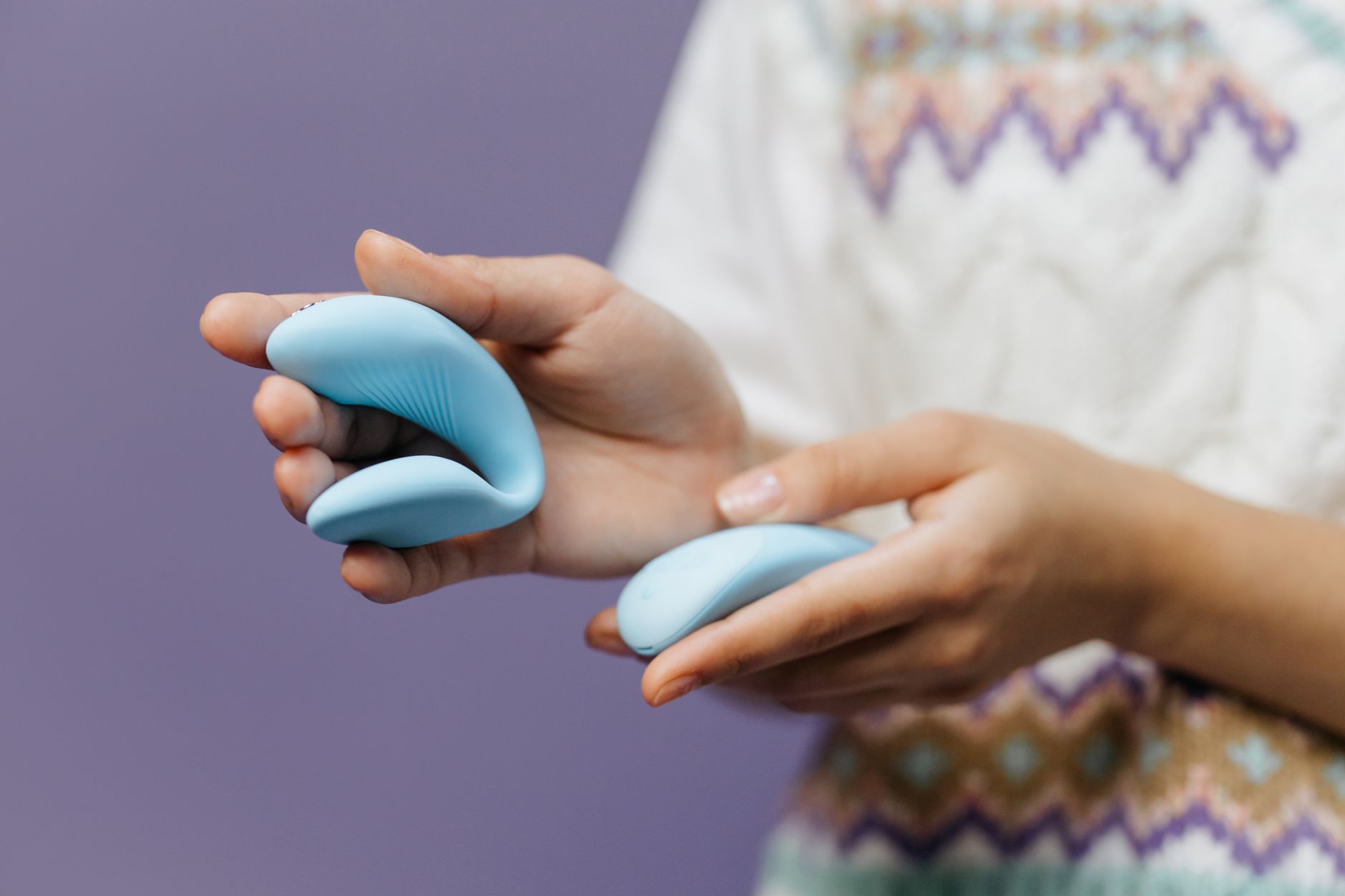
Photo by cottonbro studio on Pexels
What to do if the partnership itself is ending
Honestly, this is where lemon clitoral vibrators become invaluable. When a relationship is winding down, reclaiming pleasure solo is one of the fastest ways to remember who you are outside that dynamic. It's not petty or avoidant. It's actually necessary.
Your body learned to associate arousal with a specific person and a specific dynamic. To break that association, you need to retrain it. Solo practice with a tool like the lem vibrator teaches your body that sensation and pleasure aren't dependent on that partner. They live inside you. They're portable. They're yours.
Many of my clients say that rediscovering solo orgasm after a breakup felt like reclaiming a part of themselves they'd given away. That matters as much for healing as therapy does.
The timeline for rebuilding
You won't go from muted to fireworks in one session. But you will likely notice a shift in 7-10 days of consistent practice. Deeper shifts (where orgasm feels unmistakably intense again) usually take 3-4 weeks. That assumes you're using the vibrator 3-4 times per week and you're also doing the actual emotional work (therapy, conversations with your partner, or accepting the relationship's end).
The pleasure itself isn't the goal. It's the signal. When sensation starts returning, it means your nervous system is beginning to trust the situation again. That's the real rebuild.
FAQ
Why do orgasms feel different when a relationship gets distant?
Orgasm requires full nervous system activation. When you're emotionally unsafe or disconnected from your partner, your nervous system stays partially suppressed. Your brain prioritizes emotional protection over pleasure, which measurably reduces blood flow to genital tissue and increases pelvic floor tension. The physical mechanics are still there, but the full-body signal that creates intensity gets muted.
Can I use a lemon vibrator while I'm still trying to fix the relationship?
Yes, but solo practice first. Your nervous system needs to relearn that intense sensation is possible and safe. Once you've experienced that solo, you have a clearer sense of what needs to change with your partner. And often, that clarity either opens a real conversation or makes it clear the relationship can't shift. Either way, you're not operating from a place of wondering if pleasure is even possible anymore.
How do I use lemon vibrators after a breakup without it feeling weird or lonely?
Reframe it. You're not replacing a partner. You're remembering that your body can feel good independent of someone else's presence or validation. That's one of the most powerful things you can learn after a breakup. Many women find that solo pleasure after a breakup becomes less about missing their partner and more about reclaiming joy on their own terms. Start with that mindset and it lands completely differently.
What if I'm too angry or sad to feel pleasure right now?
Then don't force it. But set a date. Grieving a relationship takes weeks or months, and that's fine. But often around week 3 or 4, when the acute pain softens, exploring pleasure becomes a form of active healing rather than avoidance. If you're still in acute grief, focus on therapy and support. Pleasure will wait.
Can lemon vibrators help if my partner and I are trying to reconnect after distance?
Absolutely. Solo practice with the lem vibrator teaches you exactly what level of pressure and timing your clitoris needs right now. That information is valuable to share with your partner. You're not rejecting them. You're clarifying what works. That specificity often transforms partner sex because you both know exactly what actually lands for you.
Is it normal for orgasms to take longer to build after relationship conflict?
Completely normal. Your nervous system is doing its job by being cautious. Once safety returns (either with your partner, through therapy, or through solo practice), that hesitation lifts. But fighting against it or pushing for faster intensity usually makes it worse. Slow, consistent practice with a clitoral vibrator helps your system downshift into trust at its own pace.
The real rebuild starts with you
Relationship changes absolutely flatten pleasure. Your body isn't lying when sensation gets quieter. It's telling you something about the emotional state of the situation. Listen to that message. Then choose what to do with it.
If the relationship is worth saving, solo practice with a lemon vibrator gives you concrete proof that pleasure is still possible for you. That hope is contagious. If the relationship is ending, that same practice reminds you that your pleasure doesn't depend on anyone else's presence or effort. Both of those truths are worth rebuilding for.
Start this week. Give yourself 20 minutes of real privacy and a tool designed specifically for rebuilding sensation when it's been suppressed. Your clitoris has been waiting for you to come back to it. Meet it there.
If you're navigating relationship questions beyond pleasure, reach out to discuss how deeper emotional work might help. Sometimes the physical rebuild needs to happen alongside relationship clarity.