
Let's be real about foreplay timing
Foreplay shouldn't be a race, and it shouldn't drag. Yet for a lot of couples, it lands somewhere in the middle: long enough to feel obligatory, not long enough to feel satisfying. One partner's aroused. The other's checking the clock. Nobody's having fun.
Here's what I see in my practice: people assume lemon vibrators are there to speed things up. They're not. They're there to change the quality of the buildup so it actually goes somewhere.
Why foreplay feels slow in the first place
Foreplay takes time because arousal needs time. That's not a flaw. But there's a difference between "time spent building connection" and "time spent waiting for something to happen."
Three patterns show up constantly. First, one partner reaches a plateau early and stays there, which makes the other feel responsible for dragging them further. Second, manual stimulation gets repetitive, so the nervous system stops responding as sharply. Third, there's no escalation plan, so you're both just... doing the same thing longer, hoping it lands different.
All of these feel slow. None of them are actually about time.
How lemon vibrators change the dynamic
A good clitoral vibrator like the Lemon Clitoral Vibrator introduces pattern and intensity in a way fingers can't sustain. That's not because fingers are bad. It's because your hand gets tired, and more importantly, your hand is predictable after the first few minutes.
The Lemon's rhythmic suction wakes up the nervous system differently. It's not "more intense" necessarily. It's novelty. And novelty reconnects your partner's brain to their body in real time.
For the partner doing the stimulating, it means you're not the only thing holding the tension. You can touch somewhere else. You can be present without performing. That shift alone changes foreplay from work into something you're both inside of together.
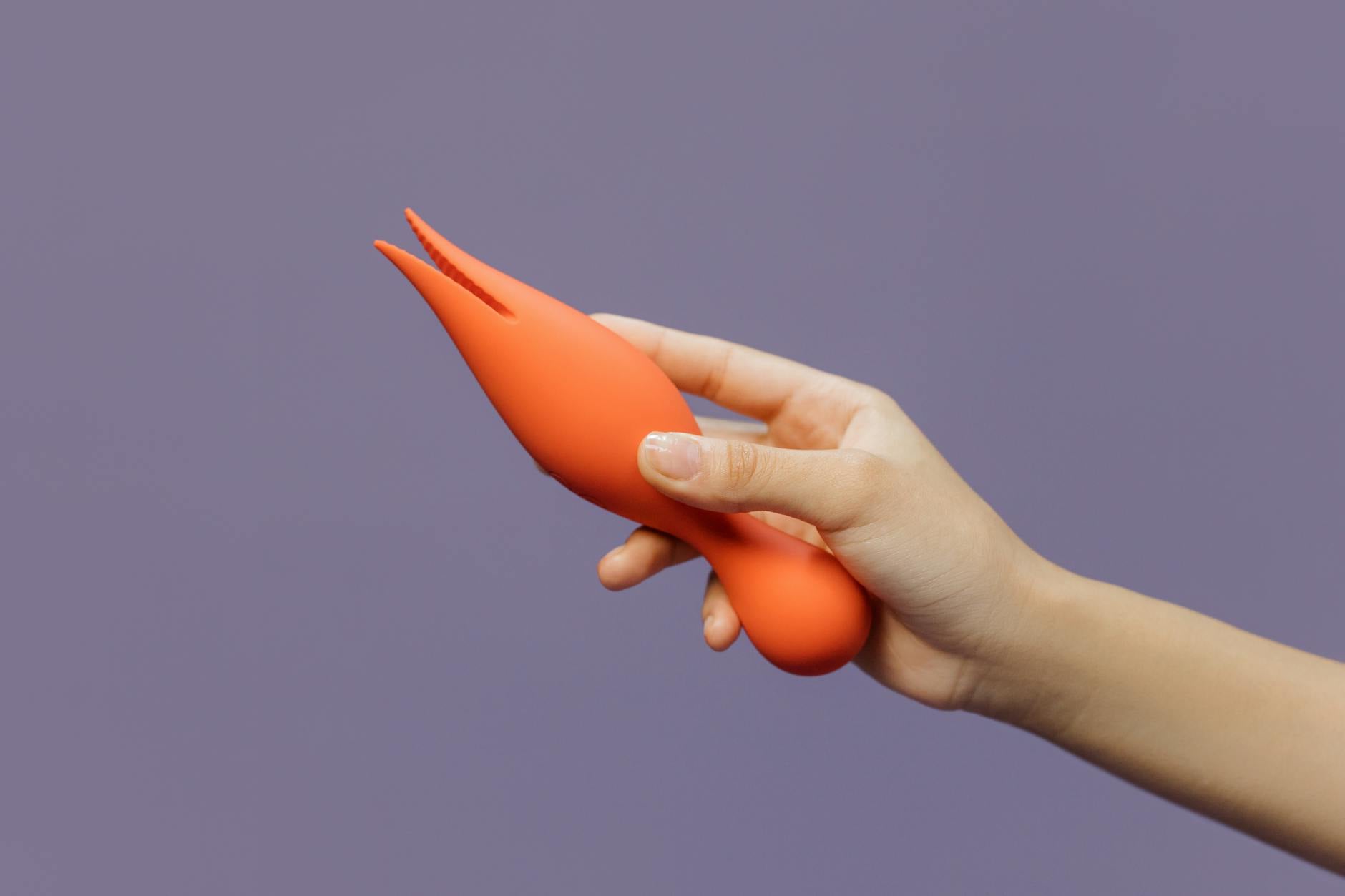
Photo by cottonbro studio on Pexels
The actual sequence that works
Foreplay with a lemon vibrator isn't "touch them, then use the toy." That flips back into the waiting problem. Instead, layer it.
Start without the vibrator. Touch them for five to ten minutes, normal pacing. Get present. Pay attention to what's actually landing. When you notice they're engaged and responsive, introduce the toy. Not as a replacement. Introduce it while you're still touching somewhere else—their neck, inner thigh, chest.
The vibrator handles focused stimulation. Your hands handle context and connection. They're not competing. They're a team.
Start the Lemon on pattern one or two. Let them get comfortable with the sensation before you escalate intensity. This usually takes two to three minutes. Then you can experiment. Try pattern shifts. Try pausing and resuming. Try using your fingers somewhere else while the toy does its thing.
What kills foreplay energy is repeating the same pattern for eight minutes. What sustains it is small changes that keep the nervous system engaged without overwhelming it.
The conversation that makes this work
Lemon vibrators only work if your partner actually wants them there. I say this often: a toy doesn't fix communication. It reveals whether communication already exists.
Before you introduce the vibrator into foreplay, say something like, "I want to try something that might make this better for both of us. I'm thinking of using a toy so I can focus on what you're responding to, and we're not just waiting for your body to catch up." You're naming the real problem, not pretending the toy is magic.
If they hesitate, ask why. Really listen. Maybe they feel like it means you're bored. Maybe they're worried it'll make them feel less desired. Maybe they think it's going to be uncomfortable. Those are three completely different conversations, and they each need different responses.
If they're into it, set a boundary together: "We can pause anytime. If the intensity is off, you say so." That permission makes the whole thing feel safer, which means the nervous system actually relaxes into arousal instead of bracing against surprise.
Building arousal velocity without rushing
Foreplay feels slow when arousal builds in a flat line. Introducing variation creates a curve. That curve is what makes things feel like they're moving.
With a lemon vibrator, your escalation toolkit gets way bigger. You have pattern shifts, intensity levels, and the option to pause. You also have the ability to do things with your hands that would be impossible if you were hand-stimulating.
Use that. After a few minutes on the vibrator, pause it. Touch them manually for a moment. Let their nervous system notice the difference. Bring the toy back at a different pattern or intensity. The contrast itself feels faster than repetition, even if you're taking the same amount of time.
Timing-wise, good foreplay with a clitoral vibrator runs 10 to 20 minutes from entry to readiness for the next thing, depending on your partner. That's not shorter than traditional foreplay. But it feels shorter because something's actually changing.
When one partner gets there quickly and the other doesn't
This is the imbalance I see most. One person's ready. The other needs more time. Usually that creates tension that kills the whole mood.
If your partner is the one getting there quickly, a lemon vibrator is a gift. It means you have something that holds their arousal steady while you continue building yours. They can stay engaged without needing you to perform. You're not racing against a timer.
If you're the one who needs more time, same deal. The vibrator keeps you from feeling like you're holding up the show. Your partner can enjoy their own arousal while the toy does its job on you. No guilt. No pressure. Just time.
The comfort stuff nobody talks about
Foreplay also feels slow when something's slightly uncomfortable. A toy that requires awkward positioning, dead arms, or a partner's hand getting tired gets abandoned fast.
The Lemon's design handles this. It's hands-free if you want it (some people use it against a pillow or hold it themselves), which means your partner's hands are free for everywhere else. That changes the experience from "them doing something to you" into "you both being involved in the same thing."
Make sure you're using lube, even if you don't think you need it. Foreplay's already going. A little more slip means less friction and less shutdown of sensation. Water-based lube is safest with silicone toys.
Position matters too. You don't want to be contorted. The best foreplay with a toy is when both of you can relax into it. That means positioning yourselves so the toy sits right and your partner can still touch you elsewhere without strain.
Foreplay doesn't have to be long. It has to move.
Here's the thing about foreplay that takes forever: it doesn't actually feel intimate if nothing's happening. Lemon vibrators fix that. They introduce change, novelty, and shared focus in a way that makes time feel different.
You're not using the toy to skip the connection. You're using it to make the connection tighter, faster, and more mutual. That's the actual shift. And that's what makes foreplay feel like foreplay instead of a chore.
People also ask
Can I use a lemon vibrator during foreplay if my partner's never tried toys before?
Yes, but do the conversation first. Let them hold it, feel the vibration, understand what it does when it's off. Don't surprise anyone during sex. Introduce it in a moment when things are already feeling good but before you're fully committed. That gives everyone an easy out if it's not working, and it keeps the experience collaborative instead of done-to.
How do I know if the vibrator's intensity is too much for foreplay?
Start low. Pattern one or two on the Lemon covers most people's entry point. If your partner pulls back, laughs nervously, or tightens up, dial it down. Intensity isn't the goal in foreplay. Engagement is. You want them relaxed and curious, not shocked or defensive. Build from there.
What if my partner gets to orgasm too quickly with the vibrator and we want to keep going?
Pause it. Let them settle. Some people find that a quick orgasm early actually relaxes the nervous system for a longer, different experience later. Others find it's a one-and-done. Talk about it after, when you're not in the middle of it. You might learn that stepping back and restarting feels good, or you might learn they want to skip the toy for the second round. Every body's different.
Is it okay to rely on a vibrator for foreplay instead of just using hands?
Yes. Your hands aren't being replaced. They're being freed up to do what hands do best: touch, stroke, hold, explore. The vibrator handles focused stimulation. You handle context. That's not laziness. That's smart partnering.
How long should I use the vibrator during foreplay?
Two to ten minutes, depending on your partner. Some people get where they need to go in three minutes. Others need longer to warm up. The point isn't a fixed time. The point is noticing when your partner's engaged and moving toward the next thing, rather than stuck in the same place. That might be fast or slow. The vibrator just makes sure it's actually moving.
Can we use lemon vibrators if we're having penetrative sex?
Absolutely. During foreplay leading into penetration, a clitoral vibrator keeps blood flow and sensation high in the clitoris, which actually makes penetration feel better. You can also use it during penetration itself, depending on positioning. Many couples find that combination intensifies everything. Start slow and see what works for your bodies.
The real reason foreplay feels long
Foreplay isn't actually about time. It's about whether something's changing. If arousal's rising and connection's happening, five minutes feels right. If you're stuck in the same rhythm waiting for someone to catch up, thirty minutes feels like a chore.
Lemon vibrators solve that by introducing novelty and variation. They're not a replacement for touch or presence. They're the tool that keeps both of those things moving in a direction that feels mutual and engaged.
That's the shift. Not faster. Better.