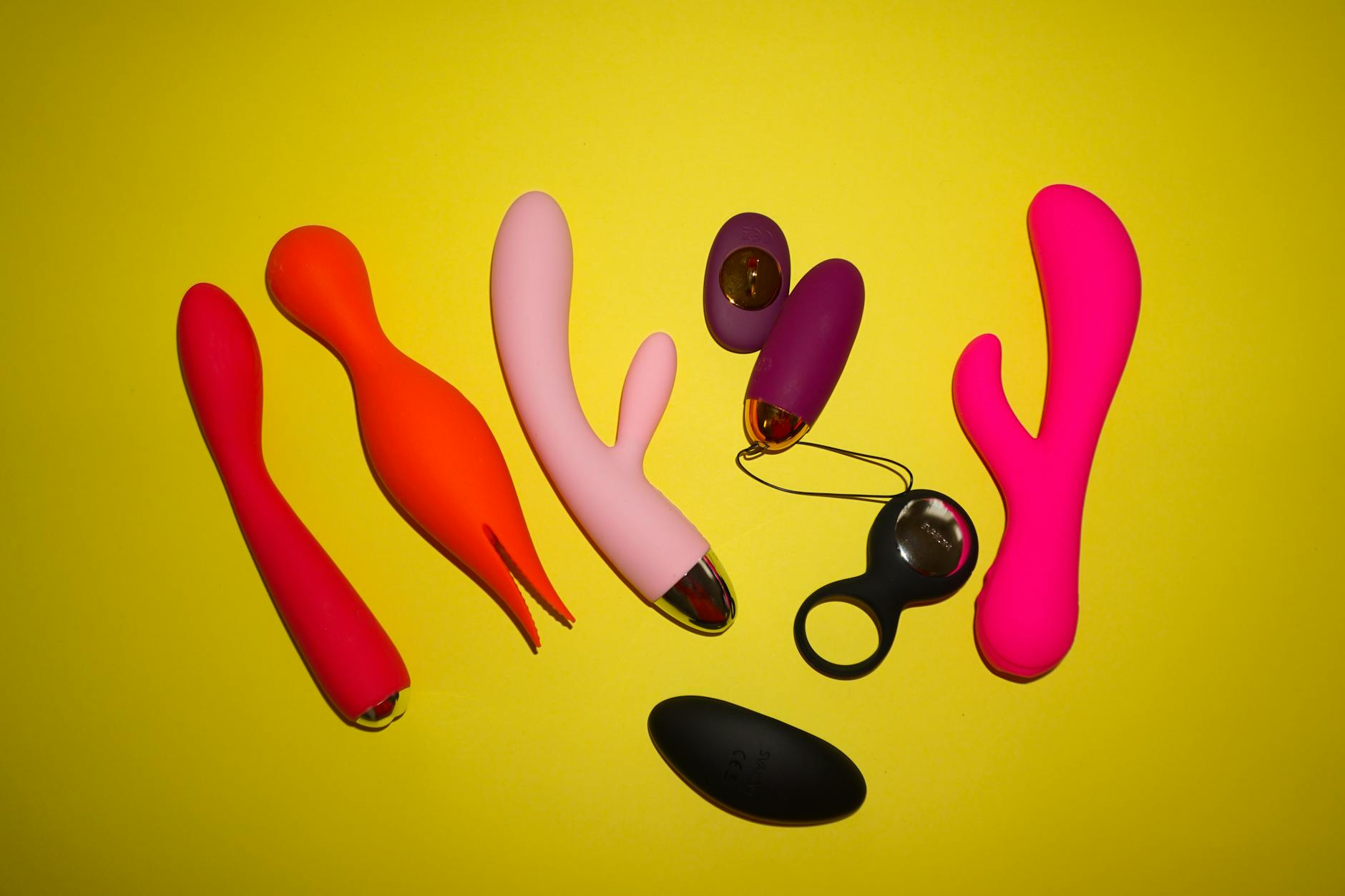
Your clitoris is changing, and that's completely normal
Somewhere between your early 40s and your 50s, you might notice that your clitoris doesn't respond quite the way it used to. Not less capable. Not broken. Just different. Maybe it takes longer to wake up. Maybe the kind of touch that used to work leaves you flat. Maybe intensity feels sharper, or gentleness feels like nothing at all.
Honestly? This is one of the least talked about shifts in midlife sexuality, and it's also one of the most solvable.
What's actually happening to your clitoris
Your clitoris is roughly the size of a pea on the surface, but it extends six to nine centimeters internally in a wishbone shape. That entire structure is packed with nerve endings, blood vessels, and erectile tissue that all respond to hormone levels, especially estrogen.
As estrogen declines through your 40s and into perimenopause and menopause, several things shift:
First, the tissue thins slightly. This means fewer cushioning layers between those exquisitely sensitive nerves and direct pressure. What felt pleasurable at 30 might feel too intense or irritating at 50.
Second, blood flow changes. Arousal in the clitoris relies on vasocongestion. That's the fancy term for blood rushing into the tissue to make it engorged and responsive. When estrogen drops, that response gets slower and less pronounced. Your clitoris might take longer to "stand up" or might stay more flattened.
Third, nerve sensitivity can feel oddly paradoxical. Some women report their clitoris feels more sensitive overall. Others feel it's duller or requires firmer pressure. Both are normal. Your nervous system is responding to hormonal change in ways that are completely individual.
The good news: none of this affects the actual capacity for pleasure. Your brain's pleasure pathways are intact. Your ability to orgasm is still there. What's changed is the trigger mechanism.
Why lemon clitoral vibrators work better during this shift
Lemon vibrators, particularly air-suction models like the Lem, use pulse and suction rather than direct vibration. That matters now more than it ever did.
Direct vibration on midlife tissue can feel jarring or even slightly painful because you're working directly against thinned tissue. Suction instead gently draws the clitoris into a chamber where pulsing waves stimulate the nerve endings without the same mechanical pressure.
It's the difference between someone tapping your shoulder versus them gently drawing you toward them. Same outcome. Completely different sensation.
Lemon sexual toys designed this way also allow you to control intensity more precisely. You're not choosing between "on" and "off". You're moving through patterns and intensities that you can adjust mid-experience. That's crucial because what feels good minute one might need tweaking by minute five.
How hormonal change rewires your arousal pathway
This is where most guides get vague and apologetic. I'm going to be specific instead.
Your clitoris doesn't wake up the same way it used to. Where you might have gotten triggered by thought alone at 35, now you might need 15 minutes of sustained warm-up. This isn't laziness or loss of desire. This is your nervous system requiring a different protocol.
When you're using a lemon clitoral vibrator for the first time after sensing this change, expect to spend time on the lower settings. Patterns 1 through 3 on most devices. This isn't a race to intensity. You're rebuilding the map of what your clitoris responds to now.
Many women find that patterns with building intensity (where the pulse gradually gets stronger rather than staying steady) work better than constant vibration. Your clitoris is learning new feedback loops, and the gradient helps.
The role of warm-up and attention
Forget quickies for a while. Literally forget them. You need what I call "arrival time". This means 10 to 20 minutes of light stimulation before you're asking your clitoris to perform.
What counts as warm-up? Touching other parts of your body. Thinking. Touching with your hands first. Getting genuinely present rather than diving into sensation.
When you bring a lemon vibrator into this phase, start with it on your outer labia or the shaft of your clitoris rather than the head. The tissue there is thicker and less easily overwhelmed. Move toward more direct contact only when you feel your body actually inviting that.
This is not foreplay. This is necessary biology.
Pattern and sensation play matter now
If you've been using the same toy the same way for five years, your clitoris has gotten used to that exact input. Your nervous system has mapped it. Now that tissue and nerves are actually changing, that old map no longer works. This is actually an opportunity.
Lemon vibrators come with multiple patterns. Use them. Move between them. Find the ones that make you actually pause and breathe rather than the ones that just feel like stimulation.
A lot of women in midlife report that they finally understand what orgasm actually feels like because they're not chasing the same sensation they've always pursued. They're discovering that their orgasms might feel different. Maybe more concentrated. Maybe slower to build. Maybe more emotional. These aren't downgrade versions of what came before. They're different.
Different doesn't mean worse.
When to get professional support
If direct pressure causes pain, that's genitourinary syndrome of menopause, and you want to talk to a gynecologist. Topical estrogen creams can change everything quickly.
If your clitoris has lost sensation almost entirely, testosterone therapy or other hormone considerations are worth discussing with a menopause-informed doctor.
If you're using lemon sexual toys and still feeling stuck, a sex therapist familiar with midlife change can help you identify whether you're working against your body or just haven't found the right approach yet.
The emotional architecture underneath
Here's what no one tells you: some of the sensation shift has nothing to do with hormones. Midlife brings relationship changes, confidence shifts, different kinds of stress, and sometimes actual grief.
Your clitoris can't distinguish between "my hormones changed" and "I'm grieving the person I used to be." Both land on your nervous system as "I need different input to feel alive." Learning to use lemon clitoral vibrators during this time is partly a physical practice and partly an emotional permission. You're telling yourself: "I deserve pleasure that matches who I am now, not who I was."
That's surprisingly profound work.
What to expect your first time
Start in a quiet moment without pressure to climax. The goal isn't an orgasm. The goal is information. You're asking your body: "What does this feel like now?" You're listening.
Begin on a low pattern. Breathe. Notice where your attention goes. If your clitoris wakes up slightly and that's all that happens, that's data. If you reach arousal you haven't felt in years, that's also data.
Many women find that after trying a lemon vibrator a few times, the sensitivity settles. Your nervous system recalibrates. The clitoris that felt numb suddenly responds. Not because the toy is magical, but because you're giving your body permission to respond in a new way.
Return to this experience several times before deciding if it works for you. Change requires repetition.
FAQ: Clitoral sensation changes and lemon vibrators
Why does my clitoris feel numb compared to five years ago?
Hormonal decline (especially estrogen) reduces blood flow and tissue thickness, which can slow arousal response and change nerve sensitivity. This is normal and treatable. It's not permanent numbness. It's a change in how your clitoris wakes up.
Can I still orgasm if my clitoral sensation feels different?
Yes. Orgasm capacity doesn't disappear. The trigger mechanism changes. You might need different input, more time, or a different pattern of stimulation, but your body can still reach climax. Many women have more intense or emotionally satisfying orgasms after midlife than before.
Are lemon vibrators better than regular vibrators for midlife clitoral changes?
Air-suction models (like lemon clitoral vibrators) tend to work better for thinned tissue because they use gentle suction and pulsing rather than direct vibration. This is gentler and allows more precise intensity control. But every body is different. Some people find traditional vibrators work fine with different patterns or lower settings.
How long until a lemon vibrator feels normal to use?
Most people report that the sensation settles and feels intuitive within three to five uses. Your nervous system needs time to map a new type of stimulation. Give yourself at least a week of regular use before deciding if it's the right fit.
Should I use lemon sexual toys with a partner or alone?
Start alone. You need to explore without performance pressure. Once you understand what your clitoris responds to now, partnered play becomes easier because you already know what you need.
What if I try a lemon vibrator and still feel nothing?
That might mean you need even lower intensity, a different pattern, more warm-up time, or professional support for hormonal or psychological factors affecting arousal. Consider talking to a menopause-informed gynecologist or sex therapist. Sometimes the barrier isn't the toy. It's information you're missing about what your body actually needs right now.
The real thing about midlife pleasure
Your clitoris didn't stop being capable. The instructions just changed. You're not losing pleasure. You're becoming an expert in a different version of pleasure. That's not a consolation prize. That's the whole point.
If you're noticing this shift, start with a lower-intensity lemon clitoral vibrator, be patient with warm-up time, and trust that what you're discovering is not a problem to solve. It's an evolution.
Your pleasure matters at every age. The version that shows up at 50 just looks different than the one at 30. And honestly? It often feels better.
Want to talk through what might work best for your body right now? Reach out and we can help you find your next tool.