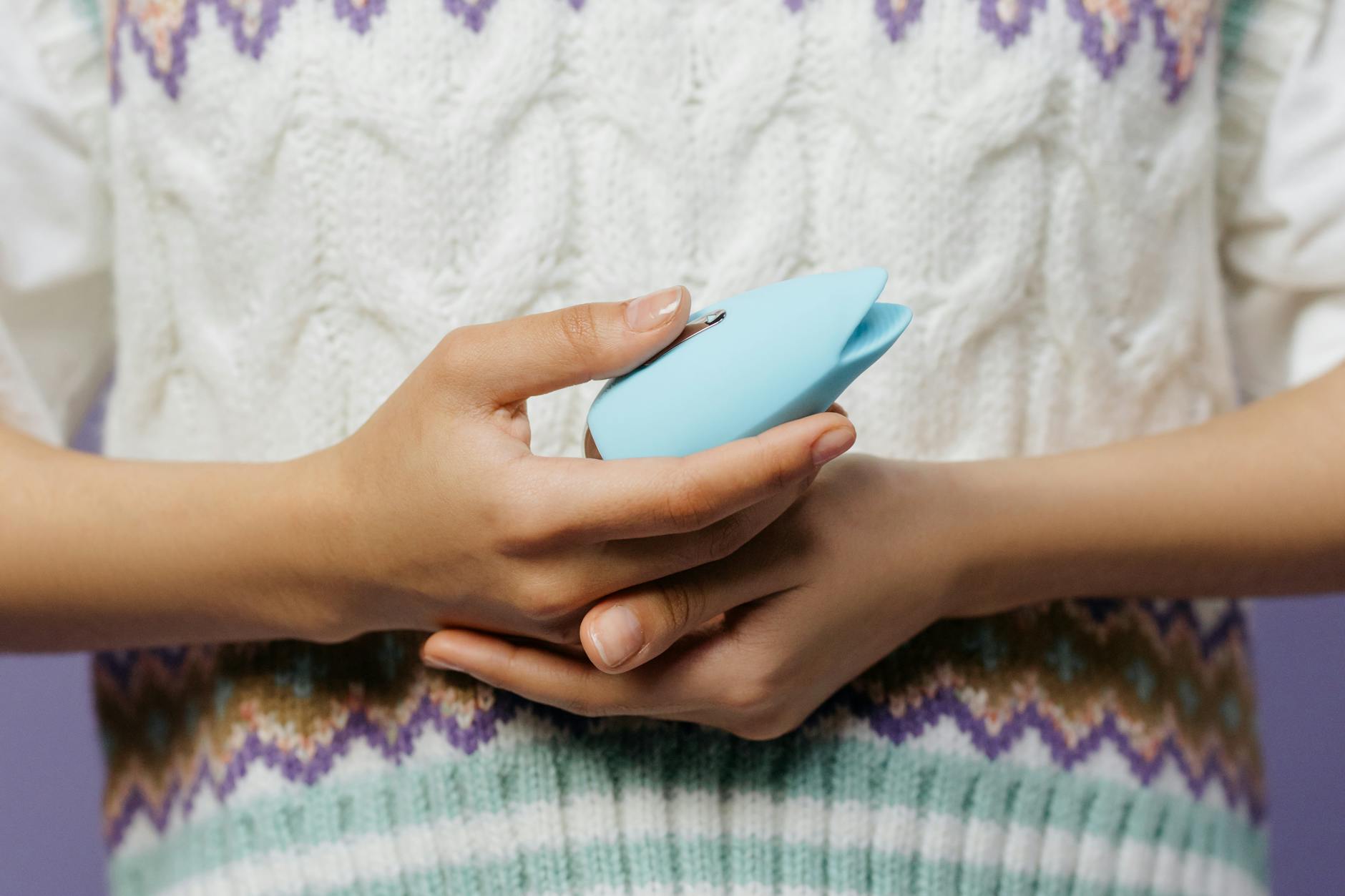
How to Use Lemon Vibrators When Anxiety Blocks Your Arousal
Here's the thing about anxiety and sex. It's not that your body stops working. It's that your nervous system hijacks the whole operation and tells your brain that pleasure is a threat.
Your sympathetic nervous system (the fight-or-flight one) floods your body with cortisol and adrenaline. Blood flow stays in your limbs, ready to run. Your pelvic floor tightens. Lubrication slows. Sensation dulls. From an evolutionary standpoint, this makes sense. From a pleasure standpoint, it's a total shutdown.
What most people don't realize is that you can't think your way out of this. You can't just relax harder or try harder. Your nervous system doesn't respond to willpower. It responds to touch, rhythm, and safety signals. And that's where a lemon clitoral vibrator becomes genuinely useful, not as a gimmick but as a neurological reset button.
The neuroscience of why vibration cuts through anxiety
When anxiety has your nervous system in lockdown, direct clitoral stimulation from a partner's hand often feels like too much. It reads as intense. Sometimes threatening. Your brain interprets pressure as aggression instead of pleasure.
Vibration is different. It's high-frequency input that your nervous system processes in a completely separate pathway than sustained pressure does. The rapid, rhythmic stimulation bypasses the threat-detection part of your brain and travels a faster route directly to pleasure centers.
Think of it this way. A partner's touch is like a conversation your anxious brain wants to argue with. Vibration is like a rhythm that doesn't require conversation. It just is, and your body either syncs with it or it doesn't. There's no performance expectation baked in.
Most importantly, when you're using a lemon vibrator solo, you control the intensity, the timing, and the exact location. Your anxiety can't hijack something you're steering.
Why sensation matters more than speed
People assume they need to crank up a vibrator to high setting when anxiety is present. Actually, the opposite works better.
Your nervous system is already flooded. High intensity reads as MORE threat, not less. Start with pattern 1 or 2 on a lemon clitoral vibrator. The point isn't to bulldoze your arousal into existence. The point is to send your nervous system a safety signal through gentle, rhythmic input.
What you're doing physiologically is activating your parasympathetic nervous system (the rest-and-digest one) while simultaneously giving your body pleasurable sensation. It's not a contradiction. It's a dual signal. Your body starts to understand that this vibration means safety plus pleasure, not performance plus pressure.
Don't rush to higher speeds. Stay at lower patterns for 10 to 15 minutes. Let your breathing slow. Let your pelvic floor actually relax instead of staying clenched. This isn't meditation, but it has a similar nervous system effect.
The grounding protocol that actually works
Most anxiety-blocking happens before you even touch a lemon vibrator.
First, get your physical environment locked down. You need zero chance of interruption. Phone off. Door locked. Zero ambiguity about whether you're safe. Your nervous system cannot relax if it's scanning for danger.
Second, ground yourself in your body for 60 seconds before you even start. Notice your feet on the floor. Notice your back against the bed or chair. Feel the temperature of the air. This sounds like meditation nonsense, but you're literally telling your nervous system, "We are here. We are safe. Nothing is chasing us."
Third, start with your hands first. Touch your own collarbone, your inner arm, your thigh. Feel texture and temperature. Your nervous system needs to know that touch from this context is safe. You're the one giving it permission.
Only then do you pick up a lemon vibrator. You've already started the shift from sympathetic to parasympathetic. The vibrator is just the next chapter, not the first sentence.
What pattern actually breaks through the block
Here's the counterintuitive part. When you're in an anxiety loop, varying the pattern sometimes works better than one single setting.
Start at pattern 1 for three to five minutes. Then switch to pattern 2 for the same duration. Back to pattern 1. Then pattern 3. You're creating novelty without escalation. Your brain can't stay in threat-mode when the sensation is changing in ways you're controlling.
This rhythmic variation also keeps you present. Your anxiety brain loves to spin forward into what-ifs. A changing sensation anchors you to right now. The lemon vibrator becomes a meditation anchor, except it feels incredible.
If you're using a lemon clitoral vibrator with built-in patterns, you don't have to manually switch. Just let the pattern change happen. Notice when your body feels it. That micro-shift of attention is doing the reset work.
After about 20 minutes of variation, most people report a shift. Not necessarily an orgasm (though that can happen). But a shift. The block softens. Your body starts believing that pleasure is possible in this context.
Repositioning to bypass the anxiety response
Anxiety often arrives with a specific bodily pattern. You might clench your pelvic floor. Hold your breath. Tense your shoulders. These patterns become so automatic that you don't even notice them.
Your position during masturbation matters because certain positions reinforce those patterns. If you're sitting up at attention, ramrod straight, your nervous system stays in alert mode even if your brain wants to relax.
Try lying down, fully supported. Pillows under your head, your lower back, between your thighs. Not propped up. Actually cradled. You're telling your body, "No performance necessary. Full support available."
Some people find that side-lying works better than face-up. Your nervous system doesn't have the same fight-or-flight memory attached to side-lying. There's less of a "on display" feeling, which anxiety latches onto.
Whatever position you choose, you want to feel held by the bed, not presented to it. That distinction matters more than it sounds.
When the block is actually relationship anxiety
Sometimes the anxiety isn't general. It's specifically tied to your partner. Maybe there's unresolved conflict. Maybe there's a history of performance pressure. Maybe you've internalized the belief that their pleasure is more important than yours.
Using a lemon vibrator solo is actually therapeutic in these cases, not a workaround. You're literally proving to your nervous system that you can access pleasure without their involvement. That you can climax. That you deserve this. That your body works fine when the relational anxiety isn't present.
This is not about replacing your partner. It's about recalibrating your nervous system's response to what sex can be. Once your body believes you can feel pleasure in a safe context, bringing that belief into partnered sex becomes much simpler.
Some couples actually do this together, with the person with the vibrator using it solo while the partner simply sits nearby, present but not performing. That can be a bridge between solo confidence and partnered ease. But that's a conversation for another time.
The timeline you actually need to expect
One session with a lemon clitoral vibrator won't solve anxiety-blocked arousal. That's not how nervous systems work. But three to five sessions over two weeks often shows measurable shifts.
By week three, most people report that touch from their partner feels different. Less threatening. More erotic. The block doesn't vanish instantly, but it softens enough to notice.
Consistency matters more than intensity. Two 20-minute sessions weekly beats one marathon hour monthly. Your nervous system needs repetition to believe that this context is safe. Regular rhythm is how you build that belief.
If you're not seeing a shift after four weeks of consistent use, that's useful information. It might mean the anxiety has roots that need professional support. A therapist trained in somatic work (body-based therapy) or someone who specializes in performance anxiety can help rewire much deeper patterns. The lemon vibrator is a tool, not a cure-all.
What happens when you finally break through
Most people describe the moment when the block softens as almost surprising. You're using the lemon vibrator at pattern 2, thinking about groceries, and suddenly you're not. Suddenly you're present. Suddenly your body feels like it belongs to you again, not to anxiety.
That's the nervous system shift. That's what you're after. Not just orgasm, though that comes. But the restoration of your body as a source of pleasure instead of a source of threat.
Once that shift happens, partnered sex changes. Not immediately, but quickly. Because your body now has proof that pleasure is possible. Your nervous system has new data. And anxiety, even if it shows up, is less believable now. Your body knows another story.
FAQ
How long should I use a lemon vibrator each session when anxiety is the issue?
Start with 15 to 20 minutes. You're not racing to orgasm. You're giving your nervous system time to shift from threat-mode to safety-mode. Set a timer if you need to, so your brain doesn't spend energy wondering how long this takes. Most people find that after 20 minutes, something shifts. Go longer if you want to, but don't pressure yourself to reach any particular endpoint.
Can using a lemon clitoral vibrator make anxiety during sex worse?
Not if you're using it solo with zero pressure. The anxiety actually decreases over time because you're proving to your nervous system that this context is safe. Where vibrators can feel pressurizing is if you're using them with a partner and there's still an expectation attached. That's a relational conversation, not a vibrator issue.
What if I can't orgasm even with a lemon vibrator and low anxiety?
Orgasm isn't the goal when you're resetting your nervous system. Pleasure, presence, and the softening of the block are the goals. Orgasm might come later, or it might not. Either way, if you're experiencing arousal, sensation, and a reduction in anxiety, the nervous system work is happening. Keep going.
Should I tell my partner I'm using a vibrator to manage anxiety?
That's between you and your partner, and it depends on your relationship. If you want to eventually bring this back into partnered sex, telling them at some point helps. But you don't owe an explanation for solo time. If you do share, frame it as self-care and nervous system regulation, not as a complaint about them.
How do I know if my anxiety needs professional help versus just nervous system resetting?
If you're having panic attacks during or before sex, if the anxiety is connected to trauma, or if it's persistent across all contexts (not just sex), a therapist is worth exploring alongside the vibrator work. These aren't either-or situations. The vibrator helps with the nervous system piece. A professional helps with the roots.
Can lemon vibrators help if my anxiety is medication-related?
Some medications absolutely blunt arousal. Talk to your prescriber about whether adjusting timing or switching medications is possible. But in the meantime, yes. A lemon clitoral vibrator with lower patterns can help your body remember that sensation is still accessible, even if arousal takes longer. It's not a fix for the medication effect, but it keeps the door open.
The real thing happening here
When you use a lemon vibrator to work through anxiety-blocked arousal, you're not just chasing pleasure. You're literally retraining your nervous system. You're building new neural pathways that say pleasure is safe. That your body is trustworthy. That this context is worth relaxing into.
That rewiring is the actual work. The orgasm is just the celebration.
If you're ready to start, lower patterns, no pressure, and patience with your body. Your nervous system will catch up.
For more on how to reset your relationship to pleasure after disruption, read about how to use lemon vibrators when you're starting fresh after years away. And if the anxiety is tied to a specific partner dynamic, we have detailed guidance on how to use lemon vibrators when your partner wants them involved but you feel shy.
Otherwise, start solo. Reset your nervous system. Your body will know what to do from there.