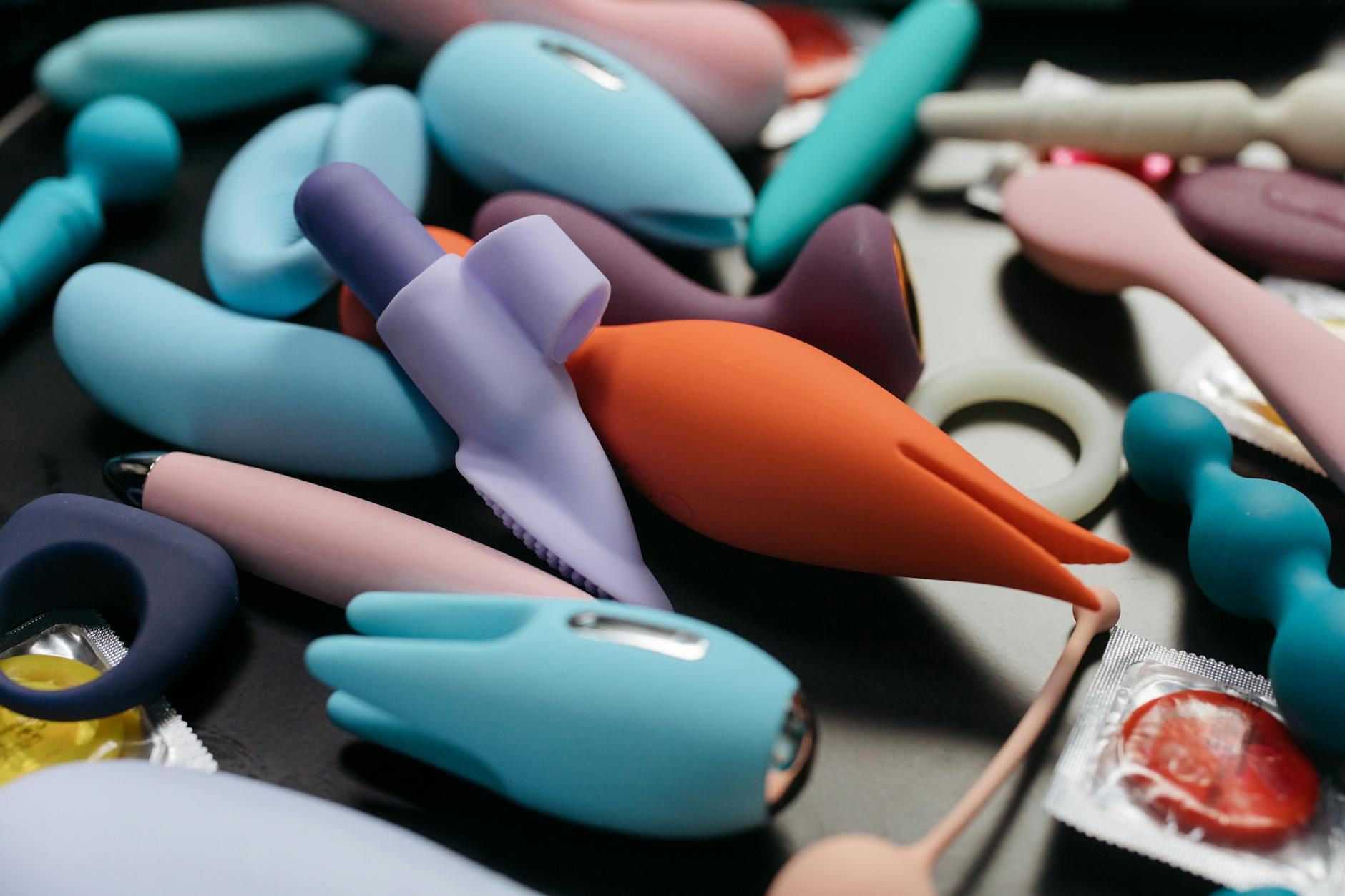
Let's be real about the pace problem
Your partner reaches for you. You're thinking about work, or dinner, or whether you locked the car. By the time your brain catches up, they're already halfway through what they had in mind. Sound familiar?
This isn't a sign your relationship is broken. It's one of the most common friction points in long-term partnerships. One person's arousal ramps up fast. The other needs a runway.
What's actually happening physiologically
Arousal speed isn't about love or desire. It's wired into your nervous system. Some people are naturally quick responders. Their brain receives a touch signal and within minutes, blood flow increases, tissue responds, and they're ready. Others have a longer build phase. The same touch registers, but it takes 15, 20, or even 30 minutes for the cascade of physiological changes to complete.
Neither is better. But when one partner is a sprinter and the other is a distance runner, the slow responder often feels pressured. The fast responder feels rejected. Both end up frustrated.
Here's the thing most couples miss: you don't have to sync your arousal to have good sex. You need a tool that helps the slower responder catch up without faking it.
That's where lemon vibrators come in.
Why your partner's fast pace might feel like rejection
When someone initiates quickly, the slow responder's first instinct is often blame yourself. "I should be more excited." "Why am I not responding?" "Do I still want this?"
None of that is useful. Slow arousal isn't a deficiency. It's just how your wiring works.
But here's what happens next: resentment. You feel rushed. Your partner feels like you're not meeting them halfway. Over time, this dynamic either flattens the sexual connection or one person just stops trying.
Breaking that cycle doesn't require a conversation about why. It requires a practical solution.
How lemon vibrators solve the timing gap
A good lemon clitoral vibrator like the Lem works because it directly stimulates the thousands of nerve endings in the clitoris at a frequency and intensity your hand or even your partner's hand can't match consistently. You don't have to wait for arousal to build through foreplay alone. You're creating the conditions for it.
Here's the workflow that actually works:
Your partner initiates. Instead of shutting down or forcing enthusiasm, you say something like, "I'm in, give me a second." You reach for your lemon vibrator. Within 3-5 minutes of direct clitoral stimulation, your body catches up. You're genuinely aroused. You're not faking. You're not rushing. You're just using a tool to sync your timeline to the moment that's already happening.
That's not cheating your connection. That's being smart about biology.
Setting it up without killing the mood
The conversation matters here. Don't wait until your partner is already touching you to introduce this. Have it when you're clothed, calm, and there's zero pressure.
Say something like: "I love when you're into me. And sometimes my body takes a minute to catch up. I'm thinking about keeping a vibrator nearby so when you initiate, I can get there faster without either of us feeling like I'm not interested." Most partners get it immediately. They'd rather you be genuinely present than faking readiness.
Then, when your partner reaches for you next time, the vibrator is on the nightstand, not hidden away. When they start kissing your neck or touching you, you're touching yourself with the vibrator simultaneously. This isn't separate from partnered sex. It's integrated into it.
Many couples report this actually intensifies intimacy because you're now openly present in your own pleasure instead of performing arousal you don't feel yet.
The practical setup
Keep your lemon vibrator within arm's reach. A bedside table works. So does a drawer that opens silently. You want access without breaking the flow.
When your partner begins foreplay, start with a lower intensity setting on your vibrator. Many people default to intensity level 3 or 4 out of 10 to begin, especially if arousal is just starting. You're meeting yourself where you are, not jumping to what feels good when you're already warmed up.
After 3-5 minutes of direct clitoral stimulation, your arousal catches up. You can then transition to partnered touch, penetration, or whatever was planned. The vibrator accelerated the beginning. It didn't take over the whole experience.
Some partners find they like the vibrator in the mix throughout. Others use it as a ramp and set it aside. Both are fine. The point is you're not stuck choosing between resentment and fakery.
When this solves more than just timing
This technique also helps if you're on medication that affects arousal, if you're stressed, if you're rebuilding connection after a period of distance, or if you've simply been together long enough that spontaneous arousal doesn't happen the way it once did.
In each case, the vibrator isn't a replacement for desire. It's a tool that helps your nervous system respond to a stimulus that's actually happening, instead of getting stuck in the gap between intention and physical reality.
Many people worry this makes sex mechanical. In practice, it does the opposite. When you're not frantically trying to feel something you're not feeling yet, you're actually more present with your partner.
The conversation after the first time
After you try this, talk about it. Not analytically. Just check in. "That felt good." "Yeah, I felt less rushed." "Want to keep doing it that way?"
If it works, it works. If it doesn't, you've learned something. Either way, you've broken the pattern of one person always waiting and the other always feeling rejected.
That shift in dynamic often matters more than the specific tool. But having the right tool makes the shift possible.
FAQ
Can I use a lemon vibrator during penetration if my partner initiates too fast?
Absolutely. Many couples use a lemon clitoral vibrator during penetration, especially if the slower responder needs continued stimulation to stay engaged or orgasm. It's not either-or. Your partner can be inside you while you're using a vibrator on your clitoris. This actually gives you dual sensation and often helps both partners feel more connected because you're both actively involved in your pleasure.
What if my partner feels threatened or thinks the vibrator means I'm not attracted to them?
This comes up, and it's worth addressing head-on before you introduce the tool. Frame it as something that helps your body work for you, not against you or them. You might say: "My arousal just moves slower sometimes. This helps me get there so we can actually enjoy each other instead of me pretending to be ready." Most secure partners recognize that faster isn't always better and that genuine arousal beats performance every time. If your partner pushes back significantly, that might point to other insecurity worth exploring together.
How fast do lemon vibrators actually work?
Most people feel measurable arousal shift within 2-5 minutes of direct clitoral stimulation with a quality lemon vibrator. That varies based on stress level, medication, arousal history, and how comfortable you feel. In the early stages of using a vibrator with a partner watching, give yourself at least 5 minutes. Don't rush it. As you get more comfortable, your body usually responds faster.
Is using a vibrator when your partner initiates too quickly a sign you should break up?
No. Mismatched arousal timelines happen in most long-term relationships at some point. It's one variable among many. The real question is whether you and your partner are willing to problem-solve together. If you are, a lemon vibrator can help bridge the gap. If there's deeper resentment or control dynamics at play, the timing issue is just a symptom.
Can I suggest this to my partner without embarrassment?
Yes, and the fact that you're thinking about how to do it kindly says something good about your relationship. Keep it simple: "I was thinking about getting a vibrator. When you come at me fast sometimes, my body needs a little help catching up. Would you be comfortable with that?" Most partners respect honesty. If yours doesn't, that's information too.
What if neither of us knows exactly when "too fast" is happening?
Pay attention to your body for a week. Do you notice a pattern? Is it every time? Only on certain days? Only when you're stressed? Once you know the pattern, you can predict it. Then your partner can learn to recognize it too. Sometimes it's not about their speed. It's about your stress level, sleep, or where you are in your cycle. Data helps. Once you understand your own arousal rhythm, you can communicate it clearly.