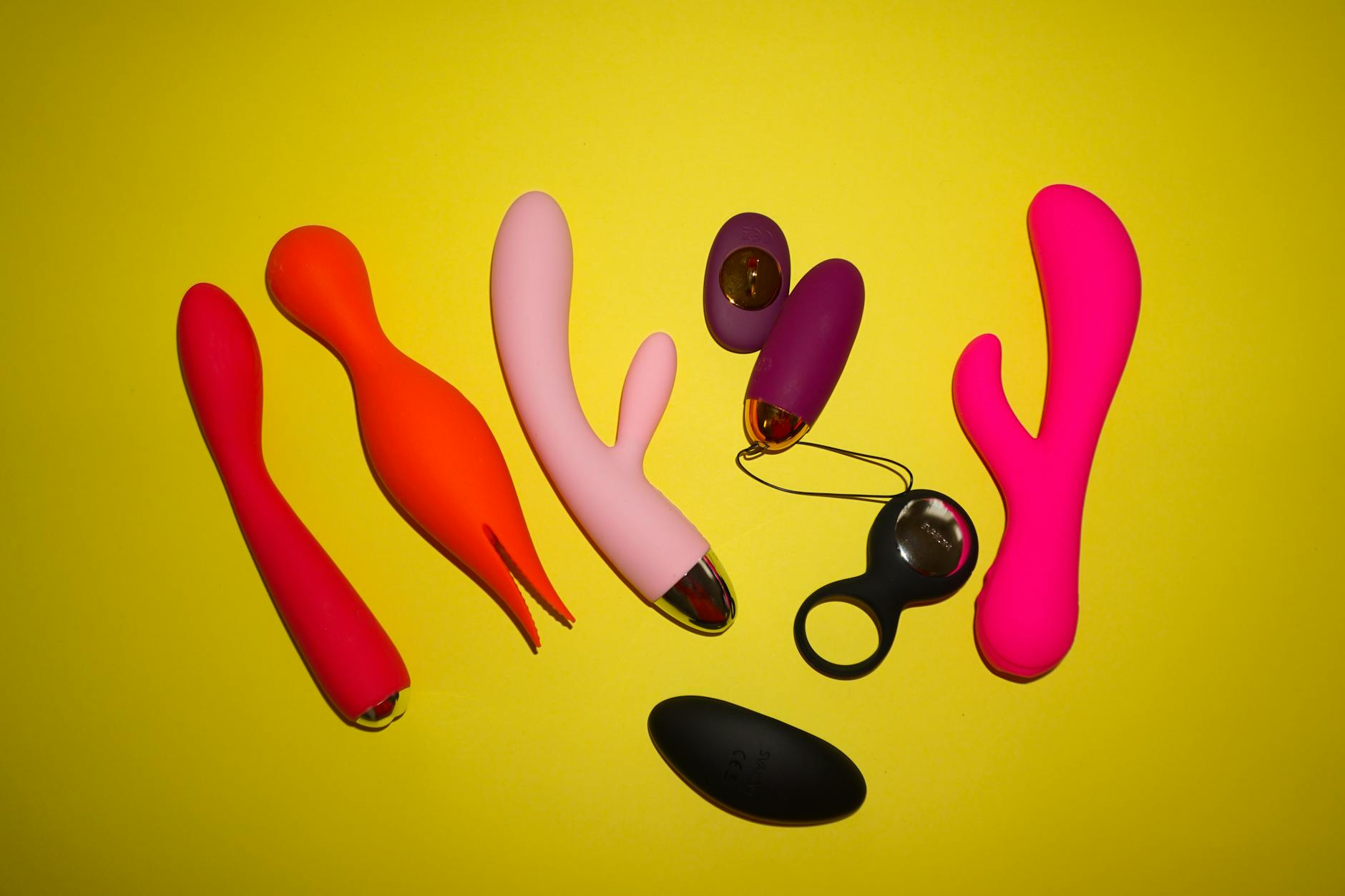
Here's what nobody tells you about arousal timing
Your arousal used to crank up in five minutes. Now it takes twenty. That's not a problem to solve. It's information you've been given, and the smartest thing you can do is redesign your approach around it instead of fighting it.
Slower arousal is wildly common. It happens with hormonal shifts, stress, relationship patterns, medication, life stage changes, or sometimes just because your nervous system got wired differently over time. None of those mean you're broken. They mean you need a different strategy. A lemon vibrator works brilliantly for slower arousal, but only if you understand how to time it.
Why arousal actually slows down
There are three main culprits, and they usually work together.
Neurological factors. Your brain is the primary sex organ. It controls blood flow, sensation mapping, and the release of dopamine and oxytocin. When you're stressed, distracted, or running on fumes, your brain doesn't prioritize arousal signals. It's protecting resources. That's not laziness. That's survival.
Physical changes. Thinner clitoral tissue, drier lubrication, or reduced blood flow to the genitals all mean sensation takes longer to register and build. A traditional vibrator can feel harsh against tissue that needs gentler stimulation. An air-suction lemon vibrator creates a sealed chamber that pulls rather than pressurizes, which feels softer initially while still building intensity gradually.
Timing expectations. Here's the one everyone misses. If you expect arousal to work the way it did at twenty-five, you'll interpret the slower pace as a failure. The moment you reframe it as "my arousal has a different tempo now" instead of "my arousal is broken," everything shifts. You stop rushing. You start paying attention.
The warm-up structure that actually works
I recommend a three-phase approach when arousal needs more time.
Phase one: Nervous system downshift (5-10 minutes).
Before any genital touch, you need your nervous system in parasympathetic mode. That means dimmed lights, your phone in another room, and whatever helps you land in your body. A bath, a few minutes of breathing, a conversation with your partner that has nothing to do with sex. The goal is not arousal. The goal is "I am not running away from a tiger."
Many people skip this step entirely and wonder why their body won't cooperate. You cannot sprint into arousal from a state of hypervigilance. It's not possible.
Phase two: Non-genital touch (5-15 minutes).
Starting at your neck, shoulders, inner arms, inner thighs. Skin-on-skin if you have a partner, or self-touch if you're solo. Light touch. Slow. The point is to activate your sensory nervous system without jumping straight to high-intensity stimulation.
This is where most people get impatient. This is also where your arousal actually begins. Not at your genitals. In your skin. In your breathing. In the shift from "I should do this" to "I want to continue."
Phase three: Genital warm-up with the lemon vibrator at low intensity (10-20 minutes).
Start at setting one. Not two, not three. One. The entire point is duration and familiarity, not speed toward climax. Many users jump straight to higher settings and then wonder why their arousal plateaus. You've flooded the system. Back up.
With a lemon vibrator specifically, the suction mechanism means you don't need high intensity to feel something. The sensation builds more subtly than a traditional vibrator, which actually works beautifully when arousal is slow. You're not fighting your body's pace. You're matching it.
Keep the lemon vibrator on setting one to three for the first 10-15 minutes of genital contact. Let arousal build without chasing it.
The technical setup that removes friction
Water-based lubricant, always. Even if your body is producing natural lubrication, adding a silky layer reduces the micro-friction that can feel overwhelming on slower-arousing tissue.
Use a generous amount. Not squeamishly. Generous. Reapply every five minutes or so.
If you're using a lemon clitoral vibrator with a partner, position yourself so you can see their face and they can see yours. Eye contact during slower arousal is a game-changer. It keeps you both grounded and reminds your nervous system that this is safe, connected touch, not just sensation chasing.
Start the lemon vibrator at the base of the clitoris or slightly to one side, not directly on the clitoral head. This feels less sharp, more diffuse. After 5-10 minutes of that, move to the clitoral glans (the head) if it feels good. You're building tolerance and sensation gradually.
Partner timing when you're the slower one
If your partner has faster arousal and you're the slower one, here's the awkward truth. You cannot make your arousal match theirs by trying harder. What you can do is ask them to spend phase two entirely on you. No penis involved. No pressure toward intercourse or any specific outcome. Just them and your body and attention.
Many partners actually find this more engaging than rushing. You're asking them to stay present with you instead of moving toward their own goal. That's intimacy.
Set a timer together if that helps. "I want 20 minutes of warm-up before we move to penetration." It removes the guessing and the stopping to negotiate mid-way.
If your partner resists this, that's a separate conversation about whether their needs and your needs can actually coexist in this relationship. (Hint: they can. But only if both people show up willing.)
What to do when arousal plateaus
You hit minute 15, feel good, and then nothing. It's not climbing. This is incredibly normal when arousal is slow.
Don't amp the intensity. Instead, change the pattern. If you've been using steady suction, try the pulsing mode on your lemon vibrator. If you've been focusing on one area, move to a slightly different spot. If you're solo, think about something that turns you on. If you're with a partner, ask them to change what they're doing with their hands or their mouth.
Small changes in stimulation pattern often unlock the next wave. Your nervous system got used to the input. Novelty reactivates it.
The mental piece that changes everything
Honestly? This is the biggest factor.
If you spend your slow warm-up time thinking "this is taking too long" or "something's wrong with me" or "my partner is getting bored," your nervous system stays tense. Arousal can't build on a foundation of shame or anxiety.
Instead, practice thinking: "I'm learning my body's rhythm." "Slow arousal means I get to stay in this moment longer." "My body is working exactly as designed."
That's not toxic positivity. That's neurologically accurate. Your thoughts directly influence blood flow and neurotransmitter release. Shame constricts. Acceptance opens.
Most of my clients with slower arousal report that once they stopped fighting their timeline and started designing around it, their overall pleasure increased. Not because their body changed. Because they changed how they related to their body.
When you actually need to check in with someone
If arousal was never slow and suddenly is, especially alongside other changes like fatigue, mood shifts, or pain, talk to a doctor. Sometimes slower arousal is your body telling you something else is going on. Thyroid issues, depression, medication side effects, or relationship disconnection all show up as arousal slowdown.
If you've reframed your expectations, invested in the warm-up process, and your arousal genuinely isn't building after 30-40 minutes of sustained, pleasurable contact, that's worth mentioning to a healthcare provider. Most of the time, it's completely treatable.
For now, start with the structure. Phase one. Phase two. Phase three. A lemon vibrator. Patience. Your body knows what to do. It just operates on its own timeline.
FAQ
How long should warm-up take before using a lemon vibrator?
Most people see good results with 20-30 minutes total from start to sustained arousal. That breaks down roughly as five to ten minutes nervous system downshift, five to fifteen minutes non-genital touch, and then genital warm-up with your clitoral vibrator starting at low intensity. Everyone's timeline differs. The point is not speed. The point is presence.
Can I use a lemon sucker on a higher setting if my arousal is slow?
You technically can, but I'd recommend starting low and building. The whole point of air-suction technology is that it feels effective at lower intensities than traditional vibrators. If you jump to setting five on a slow-arousing body, you might numb rather than arouse. Build gradually over 15-20 minutes instead.
What if my partner gets frustrated with my slower arousal?
That's actually a relationship issue, not an arousal issue. Your body's pace is not a personal attack on them. If they cannot hold space for your timing, you have a communication and boundary problem to address. You might find that a lemon clitoral vibrator actually helps because it reduces the pressure on your partner to "do something" to turn you on. It's a shared tool, not a solution to an incompatibility.
Does slower arousal mean weaker orgasms?
Not at all. In fact, people often report that slower, more gradual arousal leads to deeper, more full-body orgasms because the nervous system has time to actually prepare. Rush arousal often feels more surface-level. Slow arousal often feels richer.
Can I use toys like a lemon vibrator if I have never used one before but my arousal is slow?
Yes, and honestly, slow arousal might be the perfect reason to start. A lemon vibrator feels less jarring than a traditional wand, which means it's easier to stay present with gentle, building sensation. Start with setting one, keep it there for several sessions, and don't rush to explore higher settings. Let your body learn the sensation without pressure.
How do I know if my slow arousal is a problem or just how I work now?
If you're having pleasure, reaching satisfaction, and feeling good about your body, it's how you work now. Full stop. If you're distressed, unable to reach arousal even after a solid warm-up, or experiencing physical pain, that's worth checking with a healthcare provider. But slow arousal by itself, when you're in a good place mentally and physically, is not a problem. It's information. Use it.