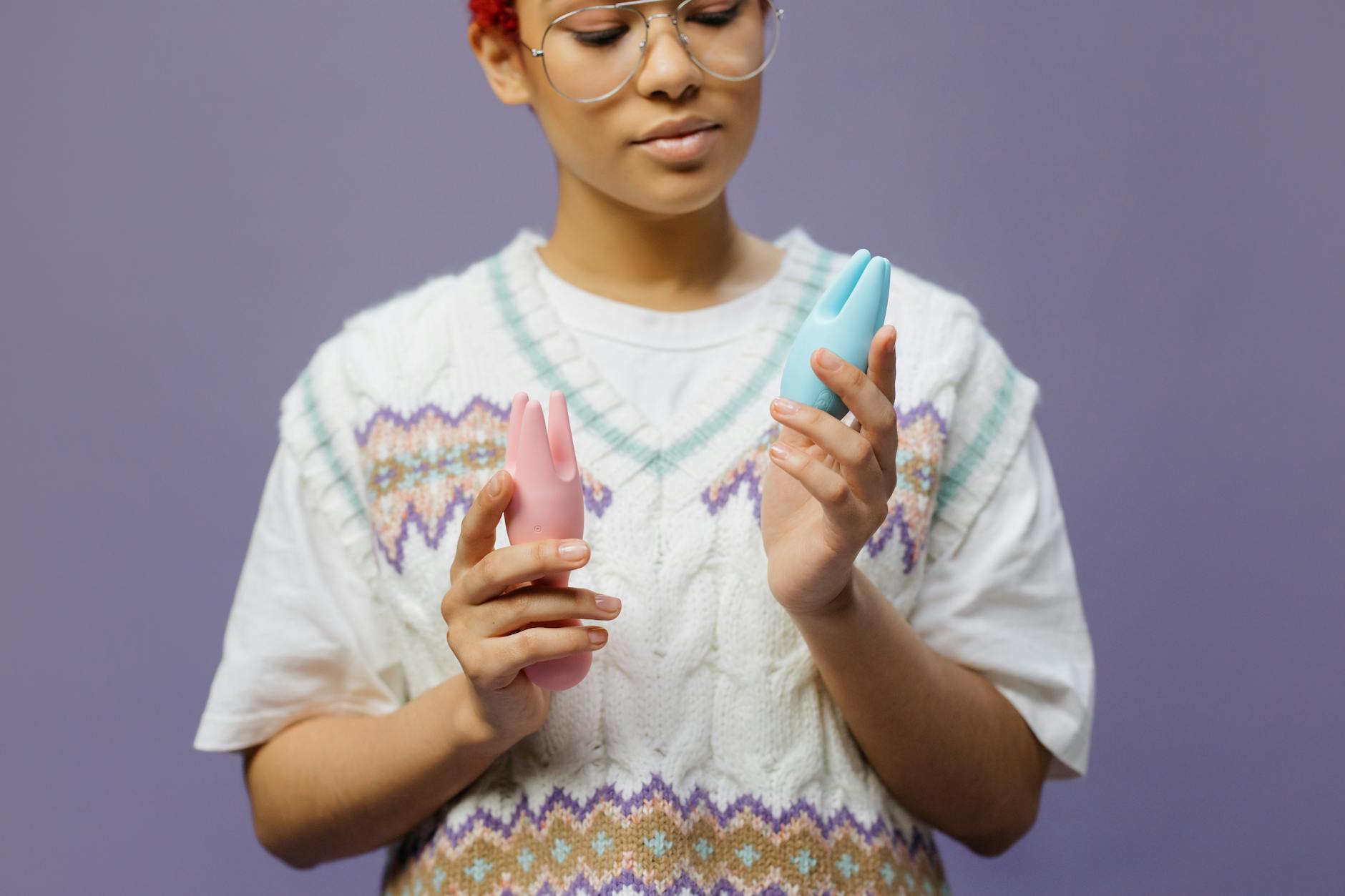
Okay so you both want to try a toy. Here's the honest setup.
Introducing a vibrator into partnered sex is not a referendum on your partner's ability to pleasure you. It's not a problem you're solving. It's a tool that changes the angle, duration, and type of stimulation you can both access together. But I know the actual conversation in your head sounds different. Maybe it sounds like doubt, or like you're making a request that's too weird, or like he's worried you'll prefer the toy to him. Let's clear that up first, because nothing kills the experience faster than unspoken anxiety.
The research is consistent on this one. Couples who introduce toys together report higher sexual satisfaction and lower performance pressure. That's not random. It's because a vibrator removes the expectation that one person's body has to do all the work. You both relax.
The conversation to have before you buy anything
Don't surprise your partner with a vibrator. I know it seems sexy in theory. In practice, it lands as either a shock or a question mark. Instead, say something like: "I've been thinking about trying something new together. Would you be open to using a vibrator with me?"
Then listen. Your partner might say yes immediately. They might have questions. They might be nervous. All of those are normal and worth hearing out.
If there's hesitation, ask what it is. Is it about preference? Intimidation? Not knowing how to use it? Fear that it means you're not happy? Each one is a real concern that deserves a real answer, not reassurance.
Here's what I tell couples in my practice. A vibrator doesn't replace your partner's hands or mouth or body. It amplifies the experience you're already having. Think of it like adding a second instrument to a song you've been singing together. It doesn't make the song better by eliminating the first instrument. It adds texture.
Why a lemon clitoral vibrator is different from other toys
Not all vibrators are the same, and that matters for first-timers especially. Most wands create broad, buzzy stimulation. Some people love them. Others find them too intense or too numb-inducing too fast.
A lemon suction-style vibrator works differently. It uses gentle pulsing air stimulation that targets the clitoral complex without the kind of direct friction that can feel overwhelming or lead to fast numbness. For couples learning together, this is valuable because the experience lasts longer and the sensation stays interesting throughout.
It's also less intimidating to watch or hold the first time. It's not massive or hospital-looking. It's discrete, intuitive, and the intensity has a wide range of settings you can explore at your own speed.
The first time. What actually happens.
Set aside 30 to 45 minutes. Not because you need to use the vibrator the whole time, but because rushing kills the point. You want space to try it, pause, talk, adjust, try again.
Start with foreplay you already know works. Kissing, touching, whatever your standard opening is. Your partner should be the one using the vibrator the first time, not you using it on yourself while they watch. This isn't about performance or proving you know how to use it. It's about your partner learning how it feels in their hand and what your body responds to.
Begin on the lowest setting. Have them hold it against your clitoral area without pressing hard. Air-suction toys work because of contact and the pulse pattern, not because of force. Your partner should feel you respond and then adjust based on that, not based on what they think should happen.
Talk out loud. Not in an instructional way like "third setting, left side." But let them hear what's working. "That feels good." "A little lower." "Stay there." This does two things. It tells your partner what's working, and it keeps the experience connected between you instead of it feeling like you've disappeared into your own sensation.
The adjustment that surprises most first-time couples
Most people assume adding a vibrator means less partnered touch. The opposite happens if you set it up right.
While your partner is using the lemon vibrator on you, they can still be touching you elsewhere. Kissing your neck. Running their hand down your side. Being inside you or using their fingers. The vibrator isn't replacing their involvement. It's freeing up one hand to do something else, or giving them a tool that gets you closer to orgasm faster so you're both on the same timeline.
I had one couple tell me that introducing a vibrator was the first time their partner could relax during sex instead of monitoring their own performance. That's the win right there.
What to do if it feels awkward the first time
It might. That's normal. You might feel self-conscious. Your partner might worry they're doing it wrong. Neither of those means you should stop.
Pause. Ask what's happening for each of you. Often the awkwardness is not about the toy. It's about vulnerability. You're asking your partner to watch you respond to something new. They're taking direction in a situation where they usually have more autonomy. That's uncomfortable until it isn't.
Take a beat. Keep foreplay going without the vibrator. Reconnect. Then try again. The second time is usually easier because the novelty shock has worn off.
If it still doesn't feel right, that's okay too. Not every tool works for every couple, and there's no failure in that. You learned something about yourselves and what you want. That's data.
The patterns that actually stick for couples
After the first time, people usually fall into one of three rhythms.
Some couples use a vibrator every time. It becomes part of your standard foreplay. Your partner knows what setting you like, how you like to be touched alongside it. It's not special anymore. It's just how you have sex.
Some couples use it occasionally, when they want a quicker orgasm or more intense sensation. It's a tool they reach for in the same way they might light a candle or put on music.
Some couples use it once or twice and then move on to something else. That's genuinely fine. The point was to try something together, and you did.
The variable that predicts which pattern sticks is communication. Couples who check in after are more likely to use the toy again. "Did you like that? Should we do anything differently?" That five-minute conversation determines whether this becomes part of your regular rotation or stays a one-time experiment.
The logistics that matter
Clean your lemon vibrator before and after use with warm water and a toy cleaner. Charge it fully the first time. Grab water-based lube if you want it. You don't need it to use an air-suction toy, but some people find it helps with contact and sensation.
Keep it in a spot you both know about. Some couples feel awkward buying or storing a vibrator. I hear that. But if it lives in a drawer or nightstand you both have access to, it stops being a secret and starts being a normal thing you both chose.
Expect the first experience to feel less polished than you imagined. You might laugh. You might feel a bit vulnerable. Your partner might ask questions. That's the actual human experience of trying something new with someone you trust. It's supposed to feel like that.
FAQ
Can my partner be inside me while using a lemon clitoral vibrator?
Yes. Many couples find this combination works well because it allows dual stimulation. Your partner can be using a penis, fingers, or a dildo inside you while the lemon vibrator provides clitoral sensation. Start with good communication about rhythm and pressure so you're not overwhelming each other.
What if I can't orgasm with the vibrator?
That's more common than you think. Some people need longer warm-up time to respond to a new sensation. Some people find their first orgasm with a toy takes multiple sessions. Build in no expectations. The goal on the first try is just to explore what the sensation feels like, not to perform a specific outcome.
Does using a vibrator mean I won't be satisfied with partnered sex anymore?
No. This is a real fear and worth taking seriously. The research shows that couples who use toys together report higher satisfaction with partnered sex overall, not lower. Using a vibrator doesn't rewire your body's response to your partner's touch. It adds a tool to your repertoire.
What if my partner is jealous or feels replaced by the toy?
That's a relationship conversation, not a toy conversation. If your partner feels threatened, the vibrator isn't the problem. The problem is that they're worried about their place in your pleasure. Address that directly. You might say: "I want to use this tool with you. I'm not using it instead of you. I want us to explore this together." If the insecurity runs deeper than that, couples counseling can help you both feel secure.
How do I bring up wanting to use a vibrator if my partner suggested it first?
The same way they would. "I'd be open to that. I've been curious about trying something new together. What were you thinking?" There's no hierarchy here. Either of you caring about expanding your sex life together is worth exploring.
Is there a "right" way to use a lemon vibrator as a couple?
No. Your way is the right way if you're both present, communicating, and enjoying it. Some couples use them for quickies. Some use them as the main event. Some rotate through different toys. There's no script here.
Here's what actually changes
Introducing a clitoral vibrator into your partnered sex isn't about fixing anything. It's about curiosity. It's about wanting to know what feels good to both of you. It's about removing the pressure that one person's body has to be enough for everything.
The couples who get the most out of adding a toy are the ones who use it as an opening to talk more, touch more mindfully, and stay present with each other. The vibrator is just the catalyst.
You don't need permission to try something new together. You don't need to know exactly what to do. You just need willingness and honesty. Start there.