
The disconnect is real, and you're not alone
You're with your partner. Everything is happening the way it's supposed to. And somewhere between the kiss and the touch, your brain leaves the room.
You're not physically numb. You're not unattracted. You're present enough to know you should be enjoying this, which somehow makes it worse. That awareness of not being there is its own special kind of lonely.
This isn't laziness or commitment failure. Disconnection during partnered sex is one of the most common things I see in couples work, and it usually signals one of three things. Something in the dynamic needs adjustment. Your nervous system is processing background stress. Or you've lost the feedback loop that keeps you aroused. Often it's all three at once.
Why your mind leaves your body during sex
Disconnection during partnered sex usually traces back to one of these patterns.
You're managing your partner's experience instead of feeling yours. This is especially common if you've ever worried about your partner's ego, stamina, or satisfaction. You're mentally tracking "Is he close? Am I taking too long? Should I be louder?" instead of "What am I actually feeling?" Your nervous system is in observer mode, not participant mode.
There's unresolved tension in the relationship. You don't need a screaming argument for disconnection to land. A misunderstanding from three days ago, a financial stress you haven't talked through, or a comment that stung more than you let on. Your body remembers what your mouth didn't say. Sex becomes something you're allowing rather than something you're choosing.
Your physical stimulation isn't actually enough. Your partner might be doing everything right, but the angle is wrong, the pressure is wrong, or the rhythm doesn't match what your body needs to sustain arousal. After a while, your mind stops trying and checks out. It's not worth the frustration.
You're carrying background stress. Work stuff, family stuff, money stuff. Anxiety is a full-body experience, and your nervous system doesn't distinguish between "external threat" and "I have a deadline Tuesday." You're flooded, so your capacity for pleasure shrinks. Presence becomes exhausting.
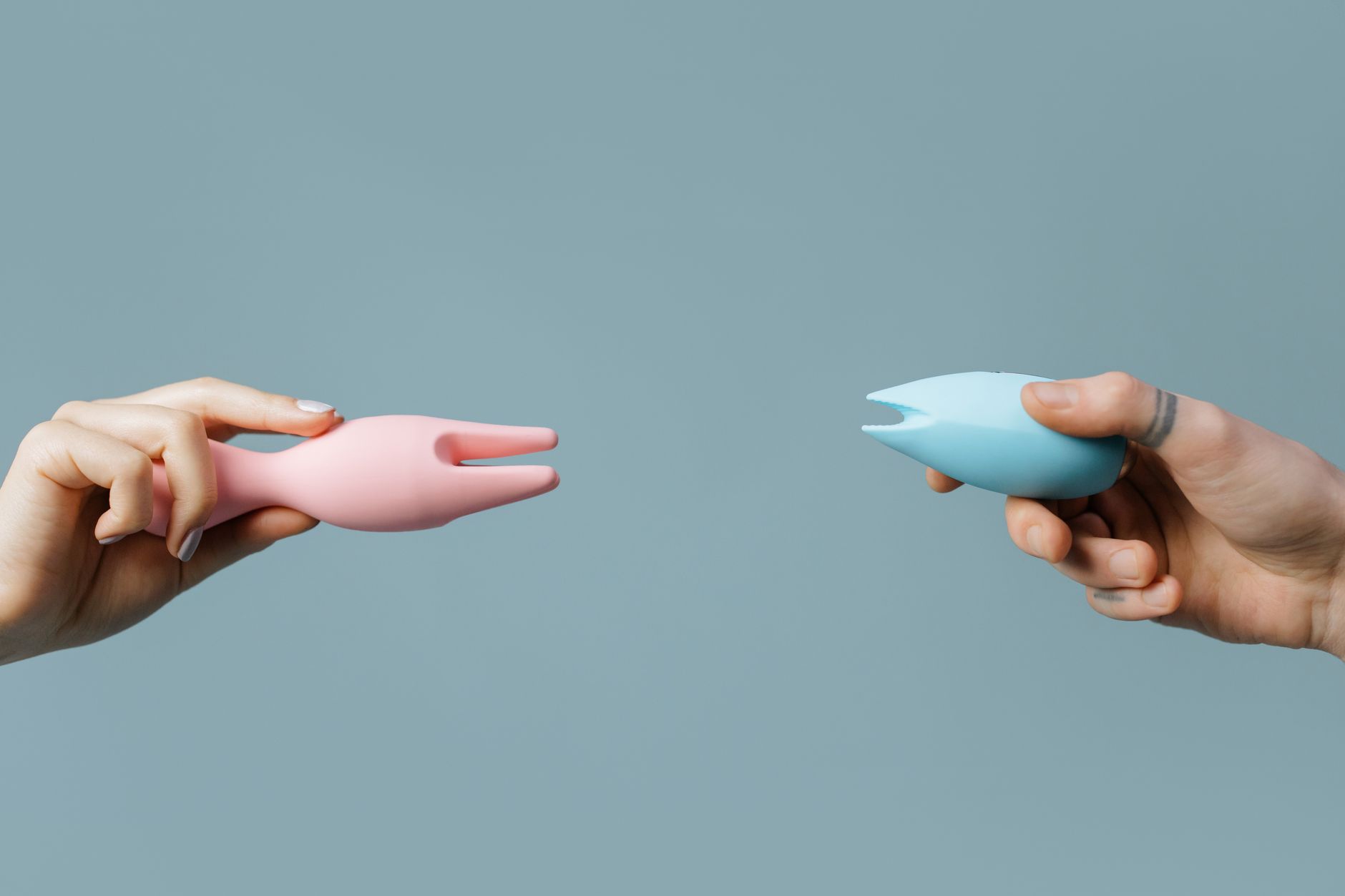
Photo by cottonbro studio on Pexels
How lemon clitoral vibrators anchor you back to sensation
Here's where lemon vibrators become genuinely useful. A good lemon clitoral vibrator does something your partner's hand or body alone might not do. It delivers consistent, reliable, intense sensation to the exact spot that matters most. That intensity is anchoring.
When your mind is wandering, scattered sensation doesn't pull you back. It just confirms the numbness. But focused, rhythmic stimulation on the clitoris interrupts that escape route. Your nervous system has to pay attention. It's almost impossible to stay mentally checked out when you're receiving direct clitoral sensation from something like the Lem. Your body starts demanding your presence.
The suction-based design of most lemon vibrators also matters. Unlike direct vibration, which can feel too intense or numb-making over time, suction creates a different pattern of stimulation. It's engaging, it feels good, and it's something your partner can't easily replicate with their hand. That difference signals to your brain that something new is happening. Novelty wakes you up.
Using a lemon clitoral vibrator during partnered sex also gives you something to focus on that isn't your partner's face or body. It's not romantic to say out loud, but it's true. When you're mentally scattered, having a specific sensation to track can be the difference between staying present and dissociating.
The conversation you need to have first
Before you bring a vibrator into partnered sex, you need to name what's actually happening.
This isn't "I want you to know I use a vibrator" (though that's fine to say). It's "Something's been off for me lately during sex, and I want to talk about what might help us both feel more connected."
Then get specific. Not accusatory, specific. "I notice my mind wanders," not "You're doing something wrong." "I think I need more direct clitoral stimulation to stay in my body," not "Your touch isn't enough."
If your partner gets defensive, that's data. It means there's something else going on. Defensiveness usually means they feel their competence or desirability is being questioned, even when you're not saying that. You might need to separate the conversation about sensation from the conversation about attraction. Say it twice if you have to.
A good partner response sounds like, "What can I do to help?" or "Should we try something together?" If you're getting pushback instead, that's a sign the disconnection might actually be a connection problem bigger than just stimulation, and that might be worth exploring with a couples therapist.
How to actually use a lemon vibrator when you're feeling disconnected
Three approaches depending on what you're comfortable with.
Solo warm-up before partnered sex. Some couples find that 3-5 minutes alone with a lemon vibrator before sex helps. You build arousal on your own terms, get your nervous system activated, and then you join your partner already somewhat in your body. The disconnection is harder to slip into when you're already warm.
Integrated into foreplay. Your partner stimulates you manually while you use a lemon vibrator on your clitoris. This works especially well if the disconnection is coming from feeling like you need to manage their experience. You're giving them something clear to do (everything else) while you handle the one thing that actually gets you there. It's collaborative, not isolating.
During penetration. If that's something you're doing, holding a lemon vibrator against your clitoris during penetration is transformative. You get the direct clitoral stimulation that's actually needed for most people to reach orgasm, your partner gets the engagement they want, and you get anchored back into your body through that intense sensation. Everyone's nervous system gets what it needs.
When disconnection is deeper than stimulation
Honest truth. Sometimes the disconnection isn't about sensation at all. It's about trust, or anger you haven't processed, or a fundamental mismatch in how you and your partner experience desire.
If you bring a lemon vibrator into sex and you still feel checked out, the vibrator isn't the problem and it won't fix it. That's when you need to pause and ask harder questions. "Do I actually want to have sex with this person right now?" "Am I resentful about something?" "Is my nervous system just flooded with other stressors?" "Do I feel emotionally safe?"
A vibrator is a tool for reconnection. It's not a substitute for dealing with actual disconnection in the relationship. But if the disconnection is about sensation, or about managing your partner's experience, or about needing something your partner physically can't provide. Then yes, a lemon clitoral vibrator can be the thing that brings you back home to your own pleasure.
Small shifts that deepen presence
Beyond the vibrator itself, three small changes that help.
Close your eyes. Not the whole time, but when you're using the vibrator or receiving stimulation. Visual input is distracting when your mind is already scattered. Closing your eyes forces you to track sensation instead.
Breathe deliberately. When your nervous system is checked out, your breath gets shallow. Notice it. Deep exhales activate your parasympathetic nervous system, which is where pleasure lives. Slow breath = more capacity for presence.
Tell your partner what you're noticing in your body. "That feels good," "I can feel this more now," "I'm more here." Narration keeps you tethered to sensation. It also gives your partner live feedback instead of having to guess.
FAQ
Can using a lemon vibrator during partnered sex make my partner feel inadequate?
It can trigger that feeling in your partner, yes. But that's on their insecurity, not on you. Your pleasure is not a referendum on their adequacy. If your partner genuinely can't handle you receiving pleasure from a tool, that's a conversation worth having outside the bedroom. A secure partner wants you to feel good, full stop. If your partner wants you to come but only from them, that's controlling, not caring.
What if my partner wants to control the vibrator?
That can work beautifully if you both trust each other's pacing. Some couples love it because it keeps you connected and collaborative. Other times it recreates the original problem because now you're managing their comfort while they manage the vibrator. Start with you controlling it. You know your body. Once you feel anchored again, you can experiment with handing over the control if that appeals to you.
Does using a vibrator mean I have a problem with sensation?
Not even slightly. Most people with clitorises need direct clitoral stimulation to orgasm or to stay aroused. That's not a deficit. That's anatomy. A lemon vibrator isn't a crutch. It's the right tool for your actual body.
How do I bring this up without making it weird?
Don't ask permission. Don't frame it as a problem with your partner. Frame it as something for you. "I want to try using a vibrator during sex because I think it'll help me stay more present" is miles better than "I need this because you're not doing something right." Most partners are relieved to have something concrete to work with instead of guessing.
What if I'm using a lemon vibrator and still feel disconnected?
Then the disconnection isn't about stimulation. It might be about the relationship, about stress, about your own nervous system, or about whether you actually want to have sex right now. A vibrator amplifies sensation. It doesn't fix trust issues or relationship resentment. If disconnection persists, that's a sign you need to address what's actually underneath it.
Can I use a lemon clitoral vibrator if my partner and I have never talked about toys before?
Yes, but have the conversation first. Not a formal sit-down, just a real one. "I've been thinking about bringing a vibrator into our sex. What do you think?" will tell you everything you need to know. If your partner is open, great. If they're hesitant, ask why. If they're flat-out no, you have a bigger conversation on your hands about bodily autonomy and shared pleasure.
The path back to presence
Disconnection during partnered sex is your body telling you something needs to change. Maybe it's the stimulation. Maybe it's the communication. Maybe it's just that you've been stressed and your nervous system is flooded. A lemon clitoral vibrator can be the tool that brings you back to your own sensation, which is the first step back to presence.
But the vibrator alone isn't the whole answer. The real work is naming what's happening and choosing to stay, with intention, in your own pleasure instead of managing everyone else's. That presence is what deepens intimacy. The vibrator just helps you get there.